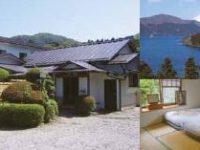
Take a weekend excursion outside of Tokyo at the haven for artists Art Biotop in Nasu, or see the beautiful Mt. Fuji near Seikai Yamanaka Lakeside Hotel or the Fuji-Hakone Guest House.

| Traveling Korea Heart and Seoul |
|
HEART AND SEOUL Add a little spice to your life with a trip to South Korea Looking for a getaway? Need to add a little flavor in your life without spending half of your vacation and budget on an airplane? In approximately 2 hours from the time you depart Haneda Airport and for the cost comparable to the bullet train between Tokyo and Osaka, you can be arriving in the heart of Seoul – a city filled with excitement, shopping, nightlife, and a whole lot more. Although the differences in culture between Korea and Japan may seem subtle at first glance, a couple of days in Seoul can be stimulating and refreshing. Whether you are after the spicy food, the warm culture, the hot nightlife or an invigorating esthetic scrub down, a visit to Seoul is sure to stimulate your senses. |
 |
|
Where to Stay |
|
|
Grand Hyatt Seoul |
 |
|
The Grand Hyatt Seoul is the hot spot for foreign travelers to Korea. The Hyatt is home to Seoul’s hippest night club, the renowned JJ Mahoney’s. Originally built in 1978 and since fully renovated, the hotel’s location is on a beautiful hilltop overlooking the Hahn River in Seoul’s famed shopping district Itaewon, where you can have custom-tailored clothing made for you in as little as one day. The only problem with the Hyatt is once you arrive, you never want to leave. The restaurant’s bars, live entertainment, gym, indoor and outdoor swimming pools, and sauna can fill up your weekend schedule quickly. The Grand Hyatt Seoul has accommodated Queen Elizabeth, the Prince and Princess of Wales, George Bush Sr., and Bill Clinton Rooms & Amenities
Guest Services
Dining & Entertainment
Activities
Local Attractions
Meetings & Events
|
|
The Westin Chosun Seoul 87 Sogong-Dong, Jung-gu The Westin Chosun is Korea’s first international hotel originally built in 1914 featuring the first running water, elevator and ice cream in Korea and has had such celebrities as Marilyn Monroe and Bob Hope grace its rooms. Rebuilt in the 1960s and since fully renovated, the Westin Chosun Seoul is within walking distance of several major international banks’ headquarters and local government offices, renowned historic landmarks and thriving shopping districts. |
|
|
Rooms & Amenities
|

|
|
Guest Services
|

|
|
Dining & Entertainment
|

|
|
Activities
|

|
|
Local Attractions
|

|
|
Meetings & Events
|

|
|
What to See
What to Do
Where to Eat
|
|
 |
|
Whitehead puts all of us consumers to shame by being involved in every aspect of the Herculean task of production. Not only does he raise the silkworms, but he also reels cocoons into thread which he then weaves into silk, and dyes with natural indigo dye that he himself grows. There are no Japanese who carry out the whole process of raising, dying and weaving their own silk.
|
|
A 600-tsubo (1,980-sq.-meter) field of mulberry is just enough to make a few kilograms of silk. Thirteen thousand worms eat around 400 kg of leaf before they spin cocoons, of which only the best are selected for weaving. They are then boiled in water and unraveled (one cocoon yields a strand of 1,800 meters) and spun into thread of about 80 strands. Thirteen hundred of these “warped” threads are then hand-threaded into a traditional wooden loom. The weaving itself takes weeks and weeks of labor.
|
|
If you can imagine how fabric was made hundreds of years ago by women sitting at their looms, working the pedals of the machinery, then you get some idea of the process craftspeople such as Whitehead undertake to produce that raw silk we see in its final stage. So how then do you put a price on a kimono made from such material? A hand-painted kimono, or one that’s dyed by indigo that takes one year to grow? “You don’t,” says Whitehead. “I’m not selling it!” Now, with the mountain cocoons that he has raised, the light-green raw silk that is spun by the similarly colored worms can sell for up to ¥40,000 per kilo. Needless to say, the market is almost non existent. The compromise for Whitehead is to involve the community in different aspects of the silk production and focus his own time on finding ways to crossbreed different types of silk moths and produce silk of a higher quality. Currently, he is crossbreeding Edo-period worms he has named the “blueflute” variety, to create a silk that is lighter and stronger. “I’ve been told that if I want to be a master craftsman I have to choose one aspect of the silk production to focus on. I was told that I’m going in too many directions,” he says. “And they have a point, but I’m not going to stop, I want to master every aspect.” By the end of the day, exhausted, everyone is spread out in chairs and on the floor in all corners of Whitehead’s home. The older women of the community are in the kitchen watching over the boiling vegetables, while the men are outside, fanning the smoke from the miso-stuffed river trout they are grilling. Over the Sunday sounds of Billie Holiday and the rainlike munching of the silkworms, the open house feels more like a community center. Says Whitehead, “What’s the purpose of being in Japan if you’re not going to learn something Japanese?”
|
 |
|
I spend most of my journey to Sapporo in a gomi truck. Gomi-man is gruff, aggressive mumbler. After three attempts to comprehend his name I give up. Surely, Gomi-man has several cars on cinder blocks in front of his decrepit trailer. He smokes Hi Lites. Actually, he smokes my cigarettes and offers nothing. I find him unpleasant but I do respect his frugality. He milks me for hours of English translation before I fall asleep. What else could I do? I’m out of cigarettes and Gomi-man not only refused to stop; he didn’t even offer a lousy Hi Lite.
|
|
In Takikawa, a provincial town 80 kilometers north of Sapporo, I buy my own cigarettes and coffee (God forbid!). I spend a wonderful afternoon with four Takikawa schoolboys who adopt me at a Seven-Eleven. We watch their classmates, the third-ranked baseball team in Hokkaido, practice. They agree to tell the team that I’m the scout who signed Hideki Arabu. I’m touched as they say goodbye with a Sammy Sosa “finger-kiss-chest-thump.”
|
|
At the expressway interchange I ponder why most motorists accelerate as they enter the tollbooth. After braking rapidly, many must back up to retrieve the mandatory expressway ticket. It’s a formidable task while suffering from whiplash. Outside of the brain dead who leave children in running cars, tollbooth acceleration is the one of the few remaining quirks among Japanese drivers these days. Of my 17 days on the road, I’ve seen less than a handful of accidents. None of these appeared to involve fatalities. Unlike the myth, Japanese drive pretty damn well. Kouichi, a traveling engineer, is my final ride of the day. He’s also the most apologetic person I have ever encountered. He’s sorry for my headache, having only two aspirins, the weather, the Kosovo conflict, basically any malady he had nothing to do with. Since he’s married with child, I refuse an invitation to his 12-tatami apartment. He conjures a solution. At 10:00 pm his wife appears at a rest area with my dinner and breakfast. I’m to sleep on the futon in his van. He leaves the keys in case I get cold. He’s sorry about all of this. Kouichi wakes me with coffee, an extra breakfast and a plethora of apologies. I’m quickly off to Sapporo to visit friends for a few days. Speaking fluent English with Julian and Amanda is a relief and we chat about my project. I mention several sightings of blonde women around here. “They’re Russians,” Amanda informs me. “A lot of people don’t like them here and they’re detested up north.” The maniac in the fish factory with the weapon! He thought I was Russian! Perhaps he had a few octopuses and trucks stolen in the past. I relate the story and my conclusions are confirmed. Good-byes are quick with Julian and Amanda. They’re non-mobile English teachers and have schools to attend. Plus, staying with friends is expensive! When a mobile teacher stops, so do the free coffee and cigarettes. Nakajima and his apprentice Shinya cruise Hokkaido for broken pachinko machines. It’s an informative excursion to Hakodate as Nakajima explains the scams players and shop owners use to cheat each other. Shinya, on the other hand, is more like a pachinko player, the kind that scrapes balls off the floor towards evening’s end. He never seems to absorb any of Nakajima’s electronic savvy. He was too busy spilling coffee and locking the keys in the car. Thank God I’m adroit with a coat hanger. I opt for the ferry to Aomori and cringe at the outlay – ¥1360 – but I’m fresh and revamped for my final leg to Myokokogen, the spa town four hours north of Tokyo. I’ve urinated about 80 times on this trip and I have thousands of witnesses. That’s because the architectural layout of men’s rooms in this country must have been sketched by an exhibitionist. I’m sure every woman reading this has seen a urinal, or perhaps 67. I can not only see the parking lot while pissing, I can focus on the faces in the cars buzzing past on the highway. I’m open for public scrutiny many times on my last full day as the coffee is flowing on the Tohoku Expressway. Today is also weird gift-day. A couple hands me a pedometer (a gadget that measures walking distance) near Sendai. Then I’m astonished when Hiro, a young salary man, struggles to find a farewell momento and pulls a socket wrench from his glove compartment. I accept it with tears. I’m touched. I’m only 100 kilometers from Myokokogen on Sunday, June 13 when a couple pays me ¥2000 for “being so patient with our horrible English”. I had forgotten about money. I calculate my expenses and realize I have covered this country for less money per day than my trip to Laos. I had originally planned on banking yen but the scheme failed abysmally. I’m more taken with the 85 rides that took me. Trusting single women, a tattoo artist, Obachans, surfers, students, thugs, company presidents, drunks, cops, and of course, salarymen in white cars. My final ride drops me at the exact same spot I had begun my journey in front of the Myokokogen Seven-Eleven. I enter it and buy my own cigarettes and coffee.
|
 |
|
The woman manning the counter at the Tokyo Tourist Information Center had boasted, “Hokkaido is a hitchhiker’s paradise!” It wasn’t the kind of information I expected from the office, but she was more than right. Hell, you don’t even need to hitch. I was merely confused, scanning a city map of Hakodate when a couple stopped and offered to drive me where I needed to go. |
|
My original theory has been amended. Those who speak English are given a lesson with my notebook serving as a whiteboard. The others become my Japanese teachers. Everyone gets my manga sticker, and like previously, my payments are usually food, coffee, and cigarettes. I still yearn for cash payment and even more so now that I’m in the red. The ferry to Hokkaido cost a whopping ¥1010! |
|
Early evening west of Sapporo Kazumi and Yuka, a middle-aged couple takes me to their home in Asahikawa. I feel slightly awkward staying with a family that spans three generations, but surprisingly all goes wonderfully smooth. I tutor their two daughters in English, use my improving Japanese with Obachan, and devour every delight placed in front of me. It’s as if Kazumi and Yuka have returned from Sapporo with a giant stuffed bear that can talk and interact. I shower, shave and am stuffed with a seven-course breakfast the following morning. Yuka prepares and boxes a lunch and I’m deposited at a perfect spot on Route 40. Takashi, a Coca Cola rep, is on his way to Wakkanai to check on malfunctioning machines. Other than a filling lunch, we swill four styles of Georgia coffee (Coke products) en route. Takashi cherishes being my last link in connecting the extremes of Japan so drives the extra 27 kilometers to Cape Soya. Russia’s Sakhalin Island is in our sights and adrenaline rushes through both of us. At Japan’s final frontier, Takashi is more excited than I, bragging to strangers of my accomplishment and his part in it. Others take photograph us as though we have just landed on Venus. I almost wish I were there. It will be frigid tonight. The lengthy sunset here is like no other I have ever witnessed as an emerald tone dominates the sky for hours. During this time I set up camp on the bluffs and stroll around the fishing village. My eyes bulge suddenly. Rows of giant squid and/or octopuses hang in a small building where workers are diligently cutting the monsters and draping them over a metal bar. I take two steps into the driveway and hope to be invited for a chewy feast with the locals. A large man, apparently the crew foreman, spots me. “Dame!” he screams. He grabs a stick with blade attached and marches straight for me. Initially, I thought he was joking. I’ve never experienced this type of behavior in Japan. I back out to the street and treat him like a territorial pit bull. He certainly acts like one. The angry fisherman reacts as though I’m the mongrel, holding his scythe high while removing the keys from the ignitions of two small trucks. I tuck my tail and scoot back to my tent. Minutes after dusk the temperature plummets from 23 to 8 in a matter of minutes. A quick lesson in solar energy and I’m in bed before any local schoolboy. Northern Hokkaido is primitive. You’re forced to manually flush public toilets. If I had been blindfolded and dropped here, I would have guessed I was in Kentucky, or perhaps Queensland. Dilapidated barns, cows and tractors dominate the landscape. Crippled cars are often propped on cinder blocks. You could film a redneck movie here.
|
 |
| Day two of the journey has a liberating feel. No longer intent to teach for salary, I now subtly imply for a helping hand. A typical spiel: |
| “In two years of teaching English I spent all but a couple of weeks in Tokyo. So now, since it’s the MOST EXPENSIVE country on earth, I MUST hitchhike. I sleep in a TENT and eat mostly ONI-GIRI. Many KIND JAPANESE have helped me out along the way and if it weren’t for their GENEROSITY, I would have never made it this far. Japanese are VERY YASASHI. |
|
As usual, I’m fed the entire day by various types, dished a couple of packs of cigarettes and am invited to a birthday party in Hachinohe, a city in north Honshu on the Pacific coast. I decline the invitation, for I have a clear-cut mission this day; a conversation with Alan Booth. Alan died seven years ago. A well-known, jocular scribe, Booth had been affiliated with Tokyo Journal for years. As travel editor in 1991 I would often check my facts with Alan. He had walked the path I am taking and documented it one of the most insightful books about Japan “The Roads to Sata”. Booth was most animated and excited when I quizzed him on a holy mountain I had heard about. Osoresan, located in the hatchet-shaped Shimokita peninsular, is where shaman dubbed Itako bridge the gap between the worlds of the living and dead. Itako are blind, old women with powers that are as mysterious as the region itself. Alan talked for over an hour about his experience there, “It’s really eerie there, and people are scared of the place.” Magically, as if an Itako had already received my message, the first car available in Hachinohe stops. Masahisa speeds up the Pacific side of the peninsular and then cuts over to Yokohama town on Mutsu Bay. He parks, and without any warning, runs into a house and gets a friend. The two 20 year-olds rush me into Yoshikito’s car and the exchange is nothing short of an Indy pit stop. I explain that I wish to visit Osoresan on my way to the Hokkaido ferry in Oma. If an Itako is available, I will camp and spend the evening chatting with Alan. True comrades, my chauffeurs accept the mission. A mere hour of daylight remains as we wind towards our destination. There are plenty of people at a spa but afterwards we see few through the mist that wafts about. The area is void of beauty. Alan had described it as “misty, brown, and dead looking.” I feel like I’m driving through a Led Zeppelin album cover. Alan was spot-on. I can feel the boys’ tension quiver from the front seats. “Stop where those cars are, Yoshikito,” I somewhat demand. Mission objectives override congeniality. Yoshikito is at least appeased. He doesn’t want to go any farther. I return to the car deflated. Yoshikito is ecstatic. We’re leaving this godforsaken place. I notice a can of Asahi Dry in the backseat while climbing in.”Wait a minute!” I squeal, sending the boys back into terror. “Can I just leave this beer here. My friend really liked beer.” “Yes, but David, please, we must leave soon,” Yoshikito pleads, wiping sweat from his brow. I wasn’t a lifelong friend of Alan and actually only met him twice. We had spoken on the phone many times. But this mountain, its ancient legend, and our similar journeys are uncanny coincidences. Parts of both our souls are surely here. I walk to a hidden crevice with the beer, hold it tightly, and speak to it. “Alan, David Duckett here. Sorry, but I couldn’t get an outgoing line here in Osoresan. Like you said, an Itako is hard to find on short notice. Anyway, my message is in this beer.” I tuck the beer under some dead shrubs. Hopefully, an Itako will complete the transmission. Alan adored Japanese beer. The boys are extremely relieved and we celebrate our near death experience in Mutsu City with the most sumptuous meal of my trip. Ramen, rice, breaded pork, scallops and beer have the three of us in a burp contest on the way to Oma, the northern tip of Honshu. I’m left at the ferry terminal and the guys thank me for the most harrowing day of their lives.
|
| education in the shadow of basho |
In the Shadow of BashoRenowned Business Professor & Japan Authority Robert E. GarrityRobert E. Garrity, often referred to as “the Grand Poobah of Gaijin” began his forty-year love affair with Japan in the 1950s where he spent seven years living in various parts of the country. After a distinguished career with the United States Air Force he moved to Honolulu, Hawaii where he was employed as a Business Professor by the University of Hawaii and established the Japan-America Marketing Institute. Professor Garrity is regarded as an expert on International Business and is an avid student of the art of Haiku. He has lectured at numerous universities and has visited Japan some ninety times over the past fifteen years to conduct lectures, seminars and consulting assignments at various companies including IBM, Daiwa Securities, Mitsubishi, Tokyo Marine Insurance, Citibank, General Electric, EDS, and Fujitsu to name just a few. |
 |
|
TJ: Tell us about your early years in Japan. Was it harder being a gaijin back then? TJ: You often lecture on American business practices here in Japan with many of your lectures focusing on entrepreneurism. Would you say you are an importer of ideas? TJ: Can you give us an example? TJ: That’s very interesting. Has this entrepreneurial spirit died off in Japan? TJ: It sure seems like you have your finger on the pulse of Japan. Where do you gain your motivation to stay on top of it all? Did you know . . .The total cost of sending a child to a private school in Tokyo from kindergarten through high school is ¥17.71 million?
|
|
| journey to the stars & beyond open air and space art in hakone |
|
Journey to the Stars and Beyond Weekend Excursions to Hakone Open Air Museum & the Kazuaki Iwasaki Space Art Museum Looking for something to do during your upcoming vacation? Exhausted all of your possibilities for leisure and play in the Big Mikan? TJ has performed the tedious task of testing the waters of various hot spring baths and carried out grueling, backbreaking research into leisure activities that can be done in one easy weekend. Under the strict orders of our Editor-in-Chief, TJ’s Education Guru Dr. Anthony Al-Jamie left the confines of his classroom to explore the beauty of Hakone and the Izu Peninsula. |
 |
|
The following are two optional weekend travel plans guaranteed to satisfy the needs of any Tokyoite seeking a pleasurable weekend filled with leisure activities, good food, friendly people and affordable accommodations. Both trips begin with a Saturday morning departure from Tokyo and have you snuggled back in your bed at home Sunday evening. |
|
|
Hakone Open Air Museum Excursion (Chokokunomori) Leave Tokyo Saturday morning for the Hakone Open Air Museum. Arrive at the museum before noon and spend a leisurely afternoon following the paved pathways through the vast outdoor museum. A wide range of unique 20th century sculptures are exhibited on lawns and in the woods covering a 20,000 square meter area. Paintings by world-renowned 20th century European and Japanese artists including Renoir and Chagall as well as approximately 230 works by Picasso are also on display indoors. While en route to your hotel, visit Owakudani which is a volcano that supplies all of the hotels in the area with natural hot spring water. On clear days, Owakudani offers a beautiful view of Mount Fuji and the entire Hakone valley. Owakudani’s claim to fame is their black eggs which are boiled in small pools of volcanic water that have seeped out through crevices in the volcano. It is the belief of the local people that each black egg you eat adds seven years to your life. However, be careful not to eat too many as too much cholesterol intake may have the opposite effect. |
 |
|
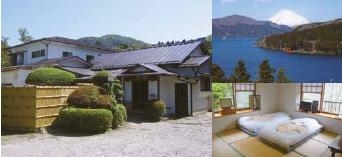
For accommodations, I highly recommend the Fuji-Hakone Guest House. The proprietors, Dr. Takahashi and his lovely wife, are well-versed in English, extremely friendly and hospitable and are more than happy to provide you with a plethora of information about things to do while in Hakone. This international guest house has a family onsen which is a hot spring bath that accommodates approximately four people at a time. The unique aspect of a family onsen is that you enter either alone or with your spouse or family and lock the door behind you – giving you the pleasure of bathing in your own private hot spring bath. The guest house rooms are extremely clean and are traditional tatami rooms with futons. A number of the rooms have a view of the bamboo forest with a stream running down below. Breakfast is served in the living room of the guest house and is quite simple – usually consisting of a hard-boiled egg, a couple of rolls of bread, a small container of yogurt, fresh fruit and coffee or Japanese tea. If you plan to eat dinner in the area, be sure to do so early as many of the local restaurants close around 8:00 p.m. On day two of your excursion, head out early for Lake Ashi (about ten minutes by bus from the guest house), where there are a number of activities that you can partake in including fishing, boat cruises, and touring the Hakone Shrine or the detached Palace Garden. Also, just a one-minute walk from Lake Hakone, is the Sekisho Immigration Checkpoint which was the entrance to the old Edo (Tokyo) area. At Sekisho, there is a small museum with drawings depicting the practices of the visa patrol. Be sure to take a stroll down the cedar-tree lined trail that was used during the Edo period for journeys between Kyoto and Tokyo. Enjoy lunch at the Boathouse restaurant. On a clear day, you will be able to see the magnificent splendor of the lake with Mount Fuji larger than life in the background. Late Sunday afternoon, begin your journey back to Tokyo. Transportation To get to the museum by car, take the Tomei Highway to Atsugi Interchange. Follow the Odawara Atsugi Road to Hakone-Yumoto. From there, take Route 1 towards Gora and turn right at the Gora Entrance. The museum is about 500 meters from the Gora entrance. To get there by train, take the Odakyu line from Shinjuku Station to Hakone-Yumoto Station. From Hakone-Yumoto Station, take a 45-minute train ride which climbs through the mountains to Chokokunomori Station which is just near the museum. From Chokokunomori Station to the hotel, there are two options with the latter being the more direct but less scenic route. The first option is to take the train to Gora Station. At Gora, change to the cable car and go to Souzan Station where you change to the rope way headed toward Togendai which is just near Lake Ashi. Along the way from Souzan Station to Togendai, you can get off at Owakudani. When you have had your fill of black eggs, continue down the rope way to Togendai station located just near Lake Ashi where you can board a bus bound for Odawara. Get off at Senkyoromae which is approximately a five or ten minute bus ride and walk to the Fuji-Hakone Guest House. The more direct way to get from the Hakone Open Air Museum to the Fuji-Hakone Guest House is to take the train through the mountains to the second stop which is Miyanoshita Station. At Miyanoshita Station, change to the bus headed towards Togendai. Prior to reaching Togendai get off at Senkyoromae bus stop and it’s a few minutes on foot to the Fuji-Hakone Guest House –all together a 30-minute jaunt. NOTE: For those of you who wish to make adjustments to the tour schedule, it may be useful to know that there is a bus leaving Shinjuku every hour that goes directly to the Senkyoromae bus stop located near the Fuji-Hakone Guest House. The Hakone Open-Air Museum Contact Information Ninotaira Hakone-machi http://www.hakone-oam.or.jp/english/ For lodging reservations Fuji-Hakone Guest House 912 Sengokuhara |
|
|
Kazuaki Iwasaki Space Art Museum Excursion Depart Tokyo Saturday morning and head to Atami. It is recommended that you check into the Tsuruya Hotel prior to heading for Ito to see the Kazuaki Iwasaki Space Art Museum. From Atami Station take the train to Ito. While in Ito, make sure you check out Omuro Yama which is an inactive volcano just near the museum where you can take a chair lift up before 4:30 p.m. and look into the mouth of the volcano. The Space Art Museum is run by Kazuaki Iwasaki, a well known graphic art/packaging designer and space artist and an amateur astronomer and musician. Iwasaki, who was a personal friend of Carl Sagan is highly praised for his precise and intricate space art drawings and paintings. In fact, members of NASA have commented that many of Iwasaki’s drawings contained images that were discovered and documented many years after Iwasaki depicted them in his drawings. There is a 3 million dollar telescope in the dome-shaped observatory where you have the opportunity to see various planets, stars and asteroids. On the particular weekend I visited I was able to see Mercury, Jupiter, Saturn and the moon. The museum’s curator, Iwasaki is a truly unique individual who is willing to go above and beyond the call of duty to ensure that your visit is a memorable one. Iwasaki San has created various added activities for visitors to the museum including seasonal parties, a guided tour of the observatory, space art drawing lessons, contests and much more. Refreshments such as Coffee and Belgian beer are available on the first floor in the “Saloon de Kazu”. |
 |
|
After becoming intimate with the stars in Ito, head back to Atami for a sashimi dinner at Kito Kito – a restaurant located along the river banks in Atami which is owned by the fish market guaranteeing it to have the freshest fish in town. At night you can relax in the hotel’s glamorous hot spring bath that has beautiful romanesque columns and architecture. If the Tsuruya Hotel is full, the New Fujiya Hotel, although its interior is beginning to show its age, has two great hot spring baths including a Rotenburo (outdoor hot spring) which is absolutely gorgeous. Unfortunately, they no longer have the Las Vegas-style performances that they once had in Atami’s Heyday. On Sunday, spend the afternoon walking around the beach, strolling through the Atami-Ginza shopping street and visiting the hilltop castle overlooking the ocean. When you have had your fill of fun in the sun, begin your journey back to Tokyo. Transportation To get to Atami by train, take either the JR Tokaido line (kakutei), the Shinkansen, or the Express Odoriko Gou. To get there by car, take the Tomei Expressway to Atsugi Interchange. From Atsugi Interchange, take Odawara Atsugi Doro to Manazuru doro which leads you to Atami’s Beachline street. The Tsuruya Hotel is on the right side of the road overlooking the ocean. To get from Atami to Ito, take the Ito train line and get off at Izukougen Station. From Izukougen Station to Omuro Yama and the Kazuaki Iwasaki Space Art Museum, take the Saboten Kouen Yuki bus which leaves every twenty minutes from the station. Get off at Saboten Kouen, the last stop. After you have enjoyed the view from Omuro Yama, take the bus back towards the station and get off at the Risoukyou stop. The Space Art Museum is a two-minute walk up the hill across from the Glass Museum. Getting back to Atami: As the last bus going to the station leaves the museum at 7:22 p.m. the museum staff often assist visitors by driving them to the train station. In the event there is no one available to drive you on the particular day you visit, they will assist you in calling a taxi which takes about ten minutes to the local train station. The last train bound for Atami departs Ito at 10:20 p.m. NOTE: As Ito is quite rural, train and bus times are subject to change and I would suggest consulting with the museum staff for the most up to date information. Kazuaki Iwasaki Space Art Gallery Contact Information 9-638 Omurokogen
For lodging reservations, contact: New Fujiya Hotel
|
|