Doraemon Debuts on Disney

JAPAN’S beloved manga and anime character Doraemon has made it to Disney! The TV and film series “Doraemon” is being broadcast in the United States for the first time after playing to a huge following in Asia over the past four decades. Disney XD, a children’s channel available in 78 million households, began broadcasting 26 English-dubbed episodes five times a week in July 2014.

(more…)

Synopsis of Haitian Art

Synopsis of Art by Artists of Haitian Descent in the Diaspora –– Part III

By Marcel Duret and Fred Thomas

One of Haiti’s greatest exports to the world is its beautiful art. To illustrate the four major trends of the Haitian diaspora as outlined in previous issues of the Tokyo Journal, Haitian art experts Marcel Duret and Fred Thomas cast a closer look on the works of selected artists.

Primitivism

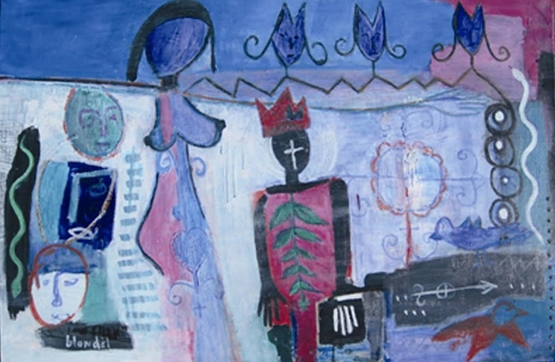
Aside the naive genre, there is primitivism. This encompasses works by artists with formal training but who decide to paint naively and consequently produce works similar to the ones by artists such as Jean Michel Basquiat, Emile Nolde and Jean Dubuffet. Such artists are influenced by the primitive art of indigenous cultures as seen in African masks and artifacts of the so called uncivilized people of other continents. These artists strive to emulate the spontaneity, unsophistication and simplicity of primitive art. They focus mainly on the essential by discarding or neglecting all unnecessary details so that the imagination can be left to complete the work. Blondel Joseph’s paintings and some of Fred Thomas’ newest creations are perfect illustrations of such a tendency.

(more…)

Garrity’s Japan

Editor’s Insight

Garrity’s Japan

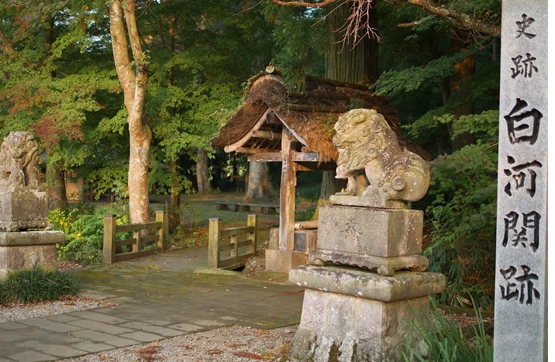
A Visit to the Shirakawa Barrier

The following is a continuation of Robert Garrity’s story describing his walk across Japan; a journey replicating haiku poet Matsuo Basho’s 1,500-mile journey from Fukagawa, Tokyo to Japan’s northern wilderness, as detailed in Basho’s world-famous travel diary, “Oku no Hosomichi.” Garrity began the first leg of his journey in the summer of 1994, and he continues walking different segments each time he returns to Japan.

Shortly after my military assignment to Japan in late 1957, I developed an interest in Japanese history. I have had an interest in history most of my life, so my newly developed interest in Japanese history was not a surprise. In the late ‘50s, however, the availability of books on Japanese history in English was rather limited. I read every book I could beg, borrow, or even steal. Occasionally in my reading, I would come across a geographical location called the Shirakawa Barrier.

(more…)

John Lennon & Yoko Ono

New York, 1971 – 1980

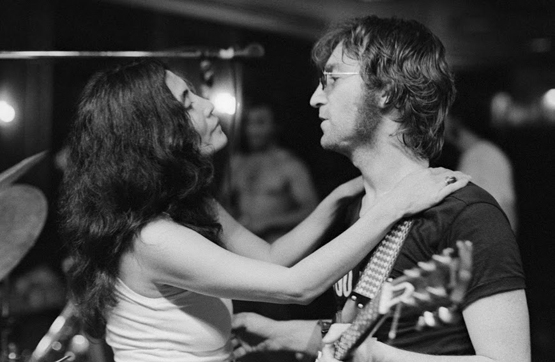
I first saw John and Yoko at a benefit concert at the Apollo Theater shortly after they arrived in New York City in 1971. I’d taken a photo of them backstage and dropped off some copies to their apartment, which was around the corner from mine in the West Village, but I didn’t make any further connection with them then. A few months later I was asked to take photos of John and Yoko for a story about Elephant’s Memory, their backing band on the new album they were recording. That night I went to their recording studio, took some photos of them all together, and they soon contacted me to use them in the album package.

(more…)

Dennis Awori: Toyota in Africa

Formerly Kenya’s ambassador to Korea and Japan (2004-2009) and now representing Toyota Tsusho Corporation as chairman in 13 African states, Dennis Awori knows a thing or two about Japan and its commercial links to the world. Tokyo Journal met up with Awori to find out more.

(more…)

A Debate with Large Consequences

Through the Eyes of Yankelovich

A Debate with Large Consequences

In industrialized nations we are in the early stages of one of the most important debates in our lifetime:
• Is growing income inequality inevitable or susceptible to change?
• If it is inevitable, what should we do to reduce its harmful effects?
• If it is susceptible to change, what actions should we take to restore greater fairness to our economies? Starting in the 1970s, and accelerating after the Great Recession of 2007-8, income of those at the top of the scale grew enormously, while wages for the middle and bottom parts of the scale stagnated.

It wasn’t until the gifted French economist Thomas Piketty published his masterful book, “Capital in the Twenty-First Century” that a serious and thoughtful debate about inequality trends began in earnest. The book has caught the attention of the industrialized nations for several reasons.

(more…)

Holmes’ Schooling

NHK’s new twist on Sherlock Holmes

By Charlotte Goff

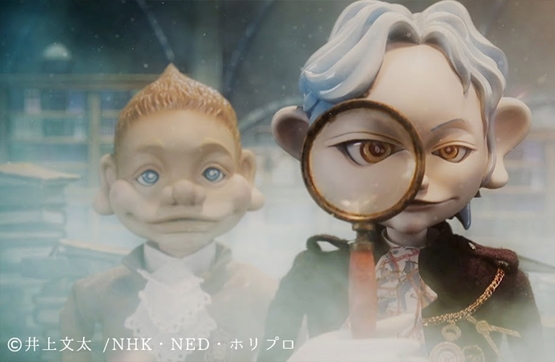
FEW could doubt that Sherlock Holmes is the world’s most famous fictional detective. Generations of readers have fallen for this master of deductive reasoning, prompting speculation as well as the fan-fiction about parts of his background not recorded by Sir Arthur Conan Doyle. In an imaginative twist on the classic detective stories, NHK has embarked on a new and unconventional Sherlock Holmes series – in which puppets and voice actors are the stars. From October 2014, viewers can expect plots full of the suspense that have hooked readers of the franchise for more than a century, distilled into a fresh and exciting form. Set in a 19th century boarding school, scriptwriter Koki Mitani brands the show a “racy school mystery.”

The forthcoming series’ action centers on fifteen-year-old Sherlock, whose extraordinary observational talents see him labelled a nerd and cast aside by his peers. This societal rejection leads Sherlock into the path of newcomer to the school, John H. Watson. Watson is fascinated by the very attributes Sherlock possesses that enforce his rejection. The two become friends after Sherlock turns his mind to clearing Watson of accusations leveled against him in the opening episode. Later, the pair work together to take on the challenges hurled increasingly in their direction. The school setting is a first among Sherlock Holmes TV dramatizations. It offers a setting to which the show’s target audience – Japanese high school students – can relate. More than a simple detective drama, the new series is a coming-of-age tale and a platform from which to learn about growing up, logical thinking, justice, and having the courage to defend it.

(more…)

ONE OK ROCK

Originally a five-piece band formed in 2005, the four-member band ONE OK ROCK now includes singer Taka (son of Japanese singers Masako Mori and Shinichi Mori), guitarist and founder Toru, bassist Ryota and drummer Tomoya. Fusing emo, rock and heavy metal with mixed Japanese and English lyrics, the band has gone from selling out shows in Japan to rocking fans overseas. Tokyo Journal Executive Editor Anthony Al-Jamie caught up with Taka and Ryota before the band’s performance at the Pomona, California leg of the Vans Warped Tour; a two-month nationwide tour that went to 43 cities.

TJ: Can you tell me about your background? Where did you guys grow up?
TAKA: I was born in Shibuya, Tokyo. I grew up in Osaka and San Francisco.
RYOTA: I’m a bassist from Osaka. When I was six years old, I started hip-hop dancing and when I was 16 years old, I joined the band.

(more…)