
ENGLISH IN JAPAN’S WORKPLACE

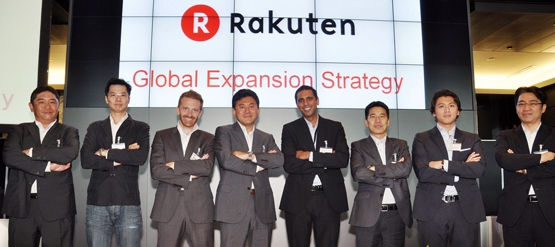
Japan’s leading entrepreneurial companies, Rakuten and Uniqlo, are taking a no-nonsense approach toward going global by adopting English as the official workplace language.

Speaking the Global Language of Business

Drastic times call for drastic measures

Two of Japan’s top entrepreneurial companies have adopted English as the official language of their workplace. This is in a country with companies known for avoiding risk whenever possible. So why would Rakuten and Uniqlo take such atypical measures at a time when English-language proficiency is low in the country? TOEFL (Test Of English as a Foreign Language) score data from 2004 to 2005 placed Japan second to last in Asia in terms of English language skills with 191 points, only one point higher than North Korea. Not helping, the collapse of two of Japan’s largest English language school chains, Nova and GEOS, over the past six years has reduced the number of opportunities for adults to study English at private language schools. So this ‘sink or swim’ approach by Rakuten and Uniqlo to speak English in the workplace is a bold but strategic maneuver at a time when they are expanding to compete in the global marketplace where the official language of business is English.

(more…)

Japan’s Seven Int’l Samurai

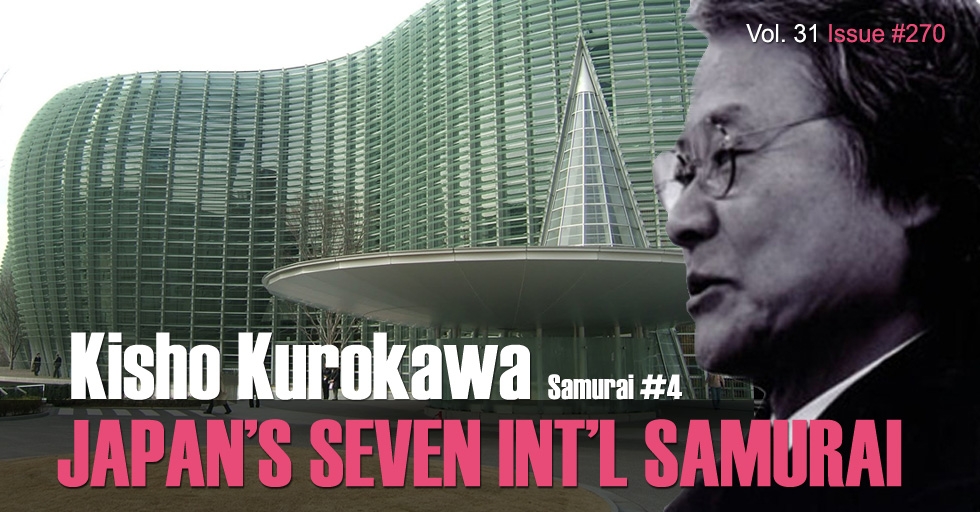
Vol. 31, Issue #270’s Feature Story identifies Japan’s 7 most influential international trailblazers, many of whom have been overlooked by the Japanese public.

Japan’s Most Influential Trailblazers

Japan has produced many outstanding individuals throughout its very long history, which dates back to 660 B.C. Visionaries and innovators have throughout history forwarded the efforts of this tiny island nation and due to these contributions, Japan has played a significant role in the region for many centuries. Pioneers such as Takatoshi Mitsui (1622-1694), advanced the way Japan did business through innovation after innovation in the textile sales industry. In the late 1800s, it was the first President of Mitsui & Co., Takashi Masuda, who sought out a global vision for exporting Japanese rice and other goods to Europe.

It is the efforts of global visionaries and innovators of post-World War II Japan that have made Japan a major contributor to the world in the fields of business, technology, film, animation, engineering, architecture, philosophy, art, music, and even athletics. The brand “Made in Japan” has become synonymous with quality, and in this article “Japan’s Seven International Samurai”, we identify Japan’s seven most influential, international trailblazers. These modern day samurai have set themselves apart from the crowd through their global influence and have helped to change the way the world perceives Japan.

It will not go unnoticed that many of Japan’s leading business figures and domestic heroes were left off the list. This is because they did not meet all of the criteria. The seven that were chosen were selected for their courage to enter unchartered waters, their desire to compete on an international scale, and their ability to be one of the best in the world at what they do.

(more…)

TJ Archived Feature Story: Issue #248 Fall 2003

This Archived Feature Article is taken from the Autumn 2003 Issue #248 which was a best-selling issue that featured a number of Japan’s foremost business leaders 

Carlos Ghosn, the ambassador of change, the icebreaker, le cost killer, the troubleshooter, or however you wish to refer to him, is Japan’s hero that has provided a glimmer of hope to leaders of thousands of ailing corporations who are desperately seeking solutions to their problems. Ghosn boldly entered Japan’s business arena with a passion and determination that had not been seen by the Japanese since Akio Morita and Sony took the US electronics market by storm. Since arriving in Japan in 1999, Ghosn took Nissan from the brink of bankruptcy to a profit-making entity in just two years.

(more…)