Tokyo Fashion Week

Tokyo Fashion Week

By Kjeld Duits

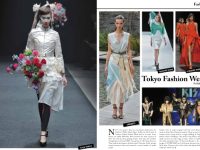
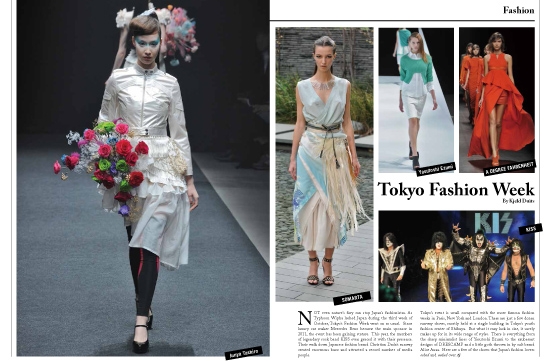
NOT even nature’s fury can stop Japan’s fashionistas. As Typhoon Wipha lashed Japan during the third week of October, Tokyo’s Fashion Week went on as usual. Since luxury car maker Mercedes Benz became the main sponsor in 2011, the event has been gaining stature. This year, the members of legendary rock band KISS even graced it with their presence. Their walk down Japanese fashion brand Christian Dada’s runway created enormous buzz and attracted a record number of media people.

(more…)

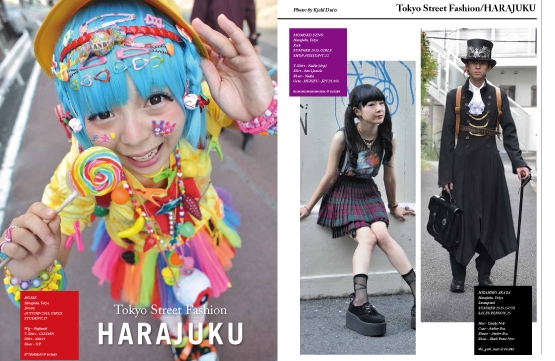
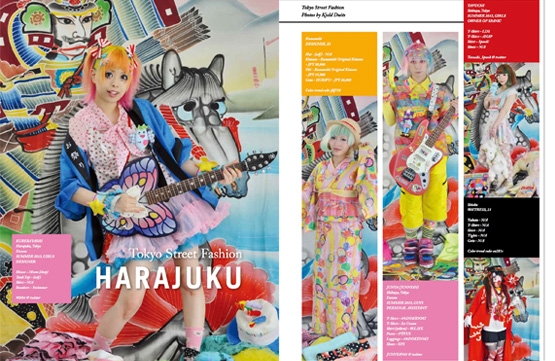
Harajuku

Tokyo Journal Street Editor Kjeld Duits hits the streets with his lens to see what’s hot in Harajuku

The complete article is available in Issue #273. Click here to order from Amazon

(more…)

Tokyo Street Editorial

TOKYO’S weather was getting cooler when this issue went to press, but political discourse was heating up as Prime Minister Abe tried to pass a new state secrecy law. Opponents were alarmed. The bill would severely weaken Japan’s democracy and limit freedom of the press, they said. On November 20, a group of independent journalists presented a petition to the government. It included Soichiro Tahara, the country’s best-known political commentator. This shows the high level of unease as Japanese journalists rarely deliver petitions.

Renewed Hope
Before the law’s deliberations dampened people’s spirits, Japan received some much needed hope. Tokyo was selected to host the 2020 Summer Olympics this September. Some commentators cried on live TV. Soon after, as if on cue, a rainbow appeared over Tokyo.

Hot Talent
The highlight is our 12-page feature Interview with Visual Kei pioneer, rock legend and classical genius Yoshiki. The X Japan founder shared his struggles and successes from his state-of-the-art Hollywood recording studio. Tokyo Journal Executive Editor Anthony Al-Jamie’s questions dig deep and cover an amazing range of topics.

The complete article is available in Issue #273. Click here to order from Amazon

(more…)

Tokyo Street Editorial

JULY brought the noise of political campaigning to the streets of Japan, culminating with the upper house elections on July 21. Thanks to the popularity of Abenomics, the coalition of the Liberal Democratic Party and Komeito regained the majority it had lost in 2007.

Some worry that this might persuade Prime Minister Shinzo Abe to return to his dream of removing Japan’s pacifism from the country’s constitution. But in spite of the landslide, his party doesn’t have enough seats to do this on its own and coalition partner Komeito is strongly opposed.

So for the time being, Abe likely will remain focused on the economy. His newly acquired power, however, should give him enough freedom to push through unpopular but badly needed reforms.

Olympics
With the important upper house elections out of the way, Japanese eyes are now fixed on the next elections: those for choosing the city to host the 2020 Summer Olympics. Tokyo is one of the three finalists and its chances look favorable. The International Olympic Committee will elect the host city on September 7 at the 125th IOC Session in Buenos Aires, Argentina. To warm up, we look at Tokyo’s Olympic bid and the surprising link between the Olympics and Harajuku, Tokyo’s irreverent center of youth culture.

Festivals
Summer in Japan, of course, means matsuri, or street festivals. Religious in origin, many are now spectacles that unite the community and attract lots of tourists. In this issue, acclaimed Japanese fashion designer Junko Koshino shares how the powerful festival of her hometown influenced her work. This inspired our cover photo of the gorgeous kimono she designed. In the same vein, I invited a number of Tokyo street fashion icons to show me looks inspired by summer and matsuri. They brought me an explosion of creativity and color, with many incorporating traditional Japanese elements in very modern ways.


(more…)

Asakusa Souvenir Shops

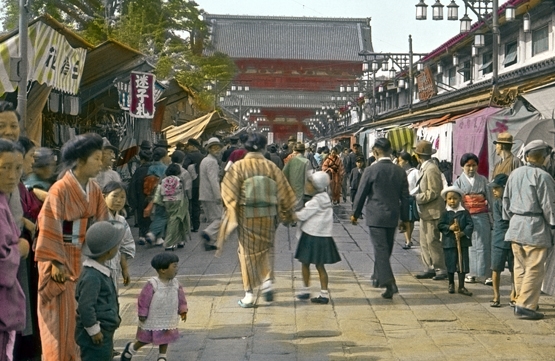
THE large photo of a crowd walking past shops along the approach to the Buddhist temple Sensoji was taken some time in 1934. Notice that while most men and even the children wear Western clothing, the women still wear kimono.

The shops, known as Asakusa Nakamise, were great crowd pleasers. Their origins are rooted in a harvest festival called Tori no Ichi. Held in November, long lines of people would wind their way along the rice pad- dies to pray and enjoy themselves at Sensoji. Naturally, this attracted a large number of merchants and entertainers, who were mostly located in the entertainment district behind the temple. Eventually, neighborhood merchants were allowed to open their shops in the approach to the temple as well.

Many of the shops developed “Asakusa Meibutsu,” or Asakusa specialties. These included Asakusa Nori (sheets of edible seaweed), Asakusa-gami (a kind of paper), Tondari Hanetari (small toys that jumped) and Fusayoji, or fairly large tufted tooth- picks made from willow trees or shrubs and used to clean the teeth as an early version of the toothbrush.

(more…)

Harajuku’s Link to the Olympics

Harajuku’s Forgotten Link with the Olympic Games

The 2020 Olympics will envelop Tokyo’s youth district of Harajuku, world famous as Japan’s center of street fashion. Every day tens of thousands of people come here to shop, hang out and see the latest trends. This square mile area is jam-packed with boutiques, fashion malls and chain stores – and it is located right at the center of the planned Olympic district.

Hopefully, the huge crowds and security presence that the Olympics would bring to Harajuku won’t smother the irreverent energy of this incubation center of Japanese pop culture. That would be painfully ironic because Harajuku partly came into being because of the Olympics.

The area was originally a small village inhabited by low-level samurai. Harajuku’s start as a center of fashion and youth culture came after WWII. U.S. Army barracks, called Washington Heights, were built in the nearby Yoyogi neighborhood, a former military drill area of the Japanese Imperial Army. Shops catering to American military families followed, and this attracted young people curious about Western culture.

When the 1964 Summer Olympics were held in Tokyo, Washington Heights became the Olympic Village for housing the athletes. People from all over Japan came to Harajuku for a chance to meet the athletes. The influx of young people persuaded young creators to set up shop in Harajuku. World famous Japanese fashion designers like Yohji Yamamoto and Rei Kawakubo of Comme des Garçons got their starts in small apartments in the area.

The complete article is available in Issue #272. Click here to order from Amazon

(more…)

The Tokyo Fish Market

The Tokyo Fish Market

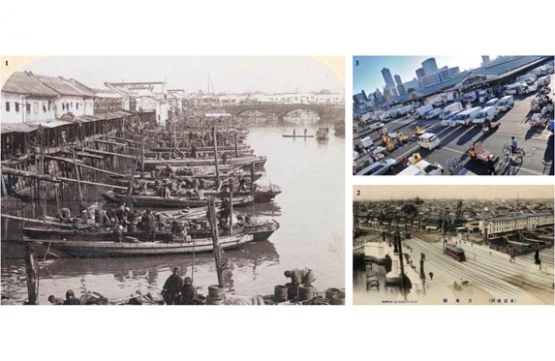
If you ask anybody in Tokyo about the city’s Nihonbashi district, they’ll most probably call it a staid business area. The Bank of Japan and the Tokyo Stock Exchange are located there, so too the headquarters of many financial companies. Even the Mitsukoshi and Takashimaya department stores there are thought conservative.

This hasn’t always been the case. Until 1923, Nihonbashi housed a colorful and busy fish market right next to the famous Nihonbashi bridge, the point from which even today all distances to the capital are measured. For hundreds of years at the empire’s navel, the smell of fish and the shouts of fishermen, brokers and peddlers penetrated the air. Some 300 fish wholesalers were located at the market. From fishing villages as far away as Hokkaido, fish arrived early in the morning every day of the year. “Piscine types almost as varied and as beautiful as those at the marvelous Naples Aquarium may be seen,” gushed Terry’s Guide to the Japanese Empire in its 1920 edition.

(more…)

Tokyo Street Editorial

IT’S spring and there’s a scent of change in the air. For the first time in history, His Imperial Majesty the Emperor welcomed the incumbent president of the Caribbean nation of Haiti. For the first time in over 20 years, the Emperor and the Empress danced in public, and one of Japan’s most acclaimed architects, Toyo Ito, is being celebrated by the world through the prestigious Pritzker Architecture Prize.

The media worldwide are heralding Japan’s economic awakening. Japan’s stock market is roaring, its overvalued yen finally falling, and the Bank of Japan is spending many trillions of yen. So far, Japan’s rally is based on politics. The economic reality is yet to be proven.

Cautious Optimism
Still, many of Japan’s business people are cautiously expressing optimism “with a large question mark,” as an official in Tokyo’s heavily industrialized Ota ward said to me this week. “Companies have high expectations, but it is unclear when they will feel the effects of Abenomics. Or whether they will experience it at all. There is still much skepticism and uncertainty.”
On the streets of Tokyo few people feel any change yet. Many are apprehensive. “I don’t notice any difference,” a small business owner in Tokyo told me while walking his dogs. “It is just the stock market and large companies. Small companies are struggling. I have no expectations that things will get better. They are just creating another bubble.”
Naturally, Tokyo Journal hopes the skeptics will be proven wrong and Prime Minister Abe’s risky economic experiment will bear fruit.

North Korean War Threats
One experiment we don’t want to bear fruit comes courtesy of our neighbor North Korea. It has once again explored the limits of overly aggressive negotiation techniques. Many foreign media seem to take the reclusive regime’s bellicose rhetoric at face value.

(more…)

Harajuku

Tokyo Journal Street Editor Kjeld Duits hits the streets with his lens to see what’s hot in Harajuku

The complete article is available in Issue #272. Click here to order from Amazon

(more…)

Tsukiji in Tokyo

The world’s largest fish market thrills the senses

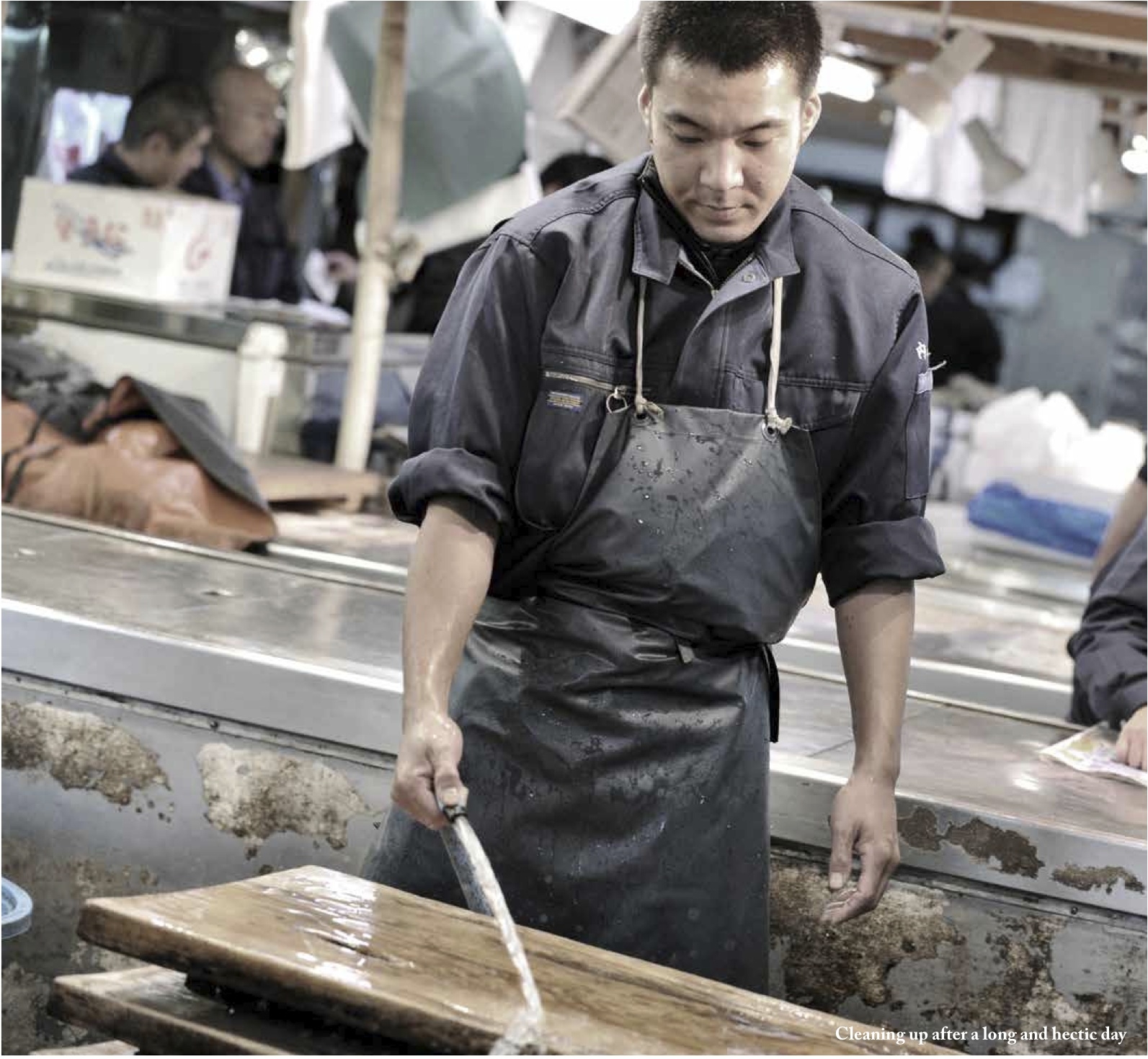
WHEN the new facilities for Tokyo’s Tsukiji Market were opened in 1935, the architects probably never imagined it would become such a popular tourist attraction. People from all over the world come in vast numbers to see the globe’s largest fish market, employing more than 60,000 people.

Especially popular is the early morning tuna auction. Men clad in blue and wearing black rain boots yank steel hooks into the exposed rear ends of hundreds of frozen tunas laid out on the concrete floor of one section of the market. With small flashlights, they quickly check the quality of the tuna. Few words are uttered. Most men walk quietly from fish to fish, careful not to let competitors know which tuna they like best.

As the auction starts, a man standing on a wooden stool shouts identification numbers and prices. Brokers place their bids, almost unnoticeably. It’s quiet, restrained, organized. You wouldn’t know that enormous amounts of money change hands. In January, a single bluefin tuna fetched a record price of 155 million yen ($1.7 million or £1.05 million).

The complete article is available in Issue #271. Click here to order from Amazon

(more…)