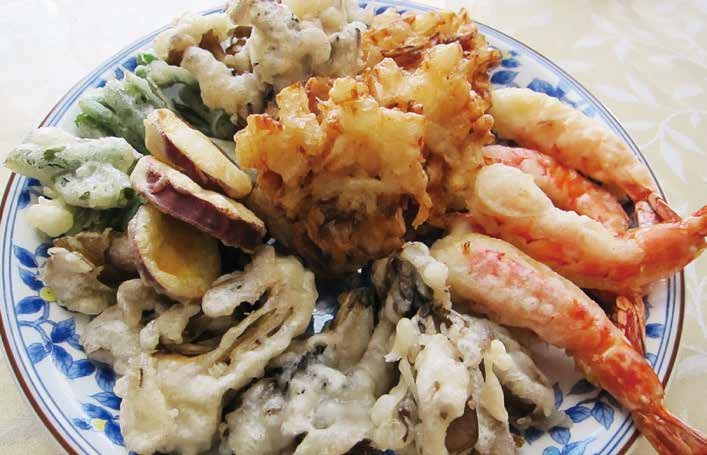
TEMPURA is fried vegetables and fish battered with flour and eggs. The typical ingredients of tempura are the white fish called kisu, shrimp, sweet potato, renkon (Japanese lotus root) and other vegetables. There are two main streams of tempura depending on the area in Japan. Fish tempura was developed in the Kanto region of Eastern Japan by using fresh fish caught in Tokyo Bay, while vegetable tempura was developed around the southern-central region of Kansai and cities like Kyoto. As you may expect, Kanto and Kansai have different ways to cook tempura. For example, Kanto people fry the batter in the sesame oil. The batter includes eggs and is fried to a brown color. They use sesame oil to remove the odor of the fish. When they eat tempura, they use tentsuyu, a salty and sweet Japaense sauce made from soy sauce, sake and soup stock. Kansai people fry the batter in sunflower oil. The batter doesn’t contain eggs and is fried to a white color. Because they are used to eating vegetable tempura, they don’t use tsuyu sauce. They only add salt to take advantage of the natural flavor of the vegetables themselves. Tempura both fish and vegetable – is one of the most popular Japanese foods in Japan and around the world. Where did the name tempura come from? There are various views. But tempura most likely stems from “tempero,” a Portuguese word for seasoning or cooking.