Summer 2013 Cool Car Award

Sexy + Sustainability

WHO said being environmentally friendly can’t be sleek and sexy? The Karma consumes no gasoline for the first 50 miles, the interior trim is environmentally responsible and its aluminum skin is finished off with a solar-cell roof. A 260-hp, four-cylinder engine combined with a 20-kWh lithium-ion battery pack and twin AC motors deliver 402 horsepower to the differential. The gasoline engine powers only the generator and the Karma is always electrically driven at the rear wheel. The Karma goes from 0 to 60 mph in 7.9 seconds, or in 5.9 seconds when the gas engine kicks in.

(more…)

On Tour with Bob Gruen Elton John Retrospective

On Tour with Bob Gruen

Elton John Retrospective

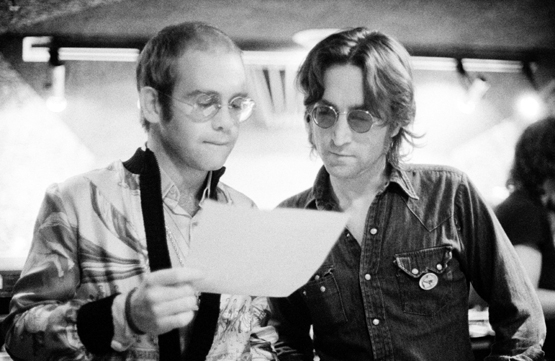
IN 1970 I was hired to photograph a young piano player from England who was going to open a show at the New York City’s Fillmore East theatre for Leon Russell. His name was Elton John. I remember thinking how hard it is to get an interesting picture of someone playing piano. It’s a very large instrument and the player is usually just sitting behind it. But Elton John is not the usual piano player. He is one of the most exciting performers I’ve worked with. He doesn’t just sit at his piano. He jumps around it and on top of it. Sometimes he leaps straight into the air with only his hands on the keyboard. And he’s still playing! He also wears onstage the most flamboyant and colorful costumes and outrageous glasses.

I enjoyed working with Elton for the next several years. At the Fillmore in the spring of 1971 I got a nice and arty double-frame photo of him with his songwriting partner Bernie Taupin. Then I photographed him twice at Carnegie Hall, and later at Madison Square Garden. At Carnegie Hall, his mother made a surprise backstage visit.

(more…)

Mari’s Homemade Cooking Recipes

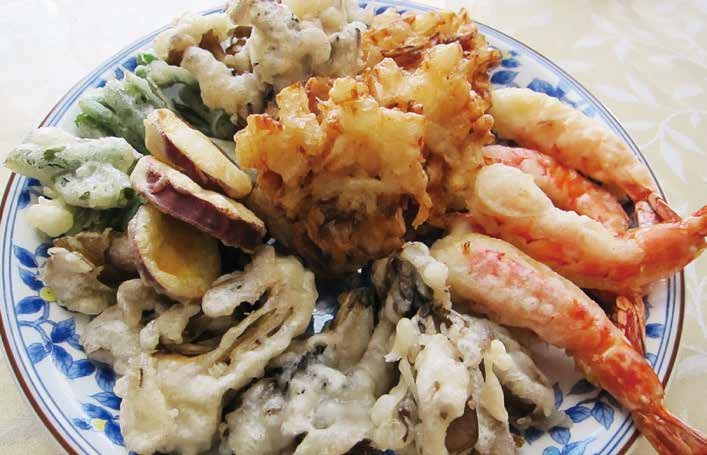
TEMPURA is fried vegetables and fish battered with flour and eggs. The typical ingredients of tempura are the white fish called kisu, shrimp, sweet potato, renkon (Japanese lotus root) and other vegetables. There are two main streams of tempura depending on the area in Japan. Fish tempura was developed in the Kanto region of Eastern Japan by using fresh fish caught in Tokyo Bay, while vegetable tempura was developed around the southern-central region of Kansai and cities like Kyoto. As you may expect, Kanto and Kansai have different ways to cook tempura. For example, Kanto people fry the batter in the sesame oil. The batter includes eggs and is fried to a brown color. They use sesame oil to remove the odor of the fish. When they eat tempura, they use tentsuyu, a salty and sweet Japaense sauce made from soy sauce, sake and soup stock. Kansai people fry the batter in sunflower oil. The batter doesn’t contain eggs and is fried to a white color. Because they are used to eating vegetable tempura, they don’t use tsuyu sauce. They only add salt to take advantage of the natural flavor of the vegetables themselves. Tempura both fish and vegetable – is one of the most popular Japanese foods in Japan and around the world. Where did the name tempura come from? There are various views. But tempura most likely stems from “tempero,” a Portuguese word for seasoning or cooking.


(more…)

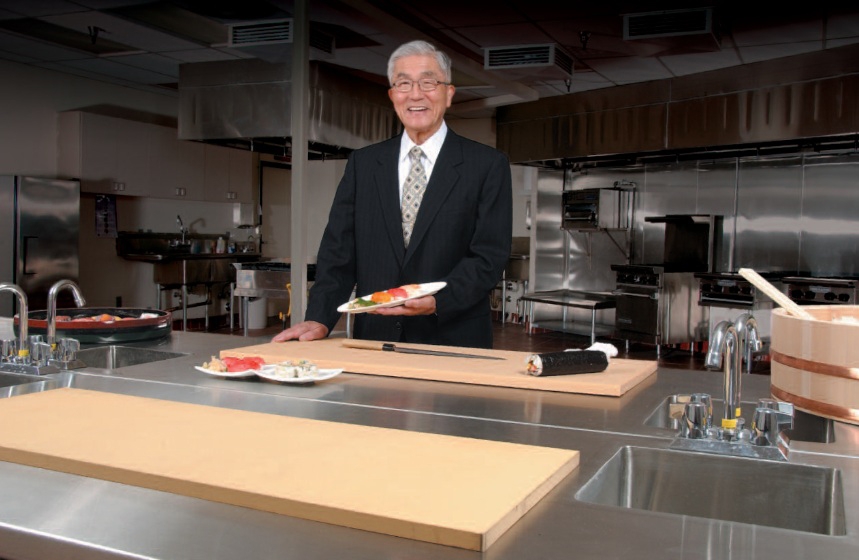
The Man Who Brought Sushi to America, Part II

How Yul Brynner and “Shogun” Made Sushi Popular

TJ: Can you tell us what you did before you became involved with Mutual Trading?
KANAI: World War II was a very big shock to me. So after the war I read about philosophy. I was very interested in Robert Owen, a famous English philosopher. I took his philosophy, which taught me many good things, and decided to make my own life to improve myself.

During the war, the U.S. was Japan’s enemy but during the Occupation they did very good things to help build Japan back up. We could not imagine that the U.S. would do so many good things for us. At that time, I met Mr. Chuhei Ishii, who was a food supplier to the U.S. before the war. He had been in the U.S. for 30 years in Santa Maria doing food distribution, but he went to China during the war to take care of the Peking Grand Hotel – a large, famous hotel owned by the French. Mr. Ishii bought the hotel and moved to Peking. At the end of the war, I met him in Japan. As his wife and my mother were friends in Japan, my mother told me, “If you do business with the United States, go see Mr. Ishii and ask him questions.” So I visited Mr. Ishii. Although he wanted to return to the States, he lost his U.S. permanent residency when he went to China. He said to me, “I am thinking of making a business exporting food to the United States because there are many Japanese immigrants who cannot get Japanese food conveniently. Why don’t you help me?” So I joined him.
“ Shogun really launched Japanese culture in the U.S.”

(more…)

2013 America’s Got Talent Winner

2013 America’s Got Talent Winner: Kenichi Ebina Sneak Preview

On September 18th, 2013, dancer Kenichi Ebina became the first Japanese performer to win NBC’s hit TV show America’s Got Talent! He won $1,000,000 and will get his own show in Las Vegas. The following is an excerpt of Tokyo Journal Executive Editor Anthony Al-Jamie’s exclusive Interview with Kenichi. For the full-length interview see Tokyo Journal’s Autumn Issue.

TJ: When did you first start to dance?
EBINA: I was attending an English Language Institute for international students who don’t speak English. It was connected to the college I graduated from and since it was on a college campus, students in the English school were invited to college activities. I went to a dance party for welcoming freshman. At the time I wasn’t big into dancing at all but I knew the steps for the “Running Man” that I had learned from some friends. At the party they made a circle and people started showing off. I had to go in and I did the Running Man. People started getting loud. At the time I thought they were loud because I wasn’t good, but it was the opposite – they were cheering for me! After that, I started thinking dancing was fun. I started watching videos and copied their moves and steps.

(more…)