

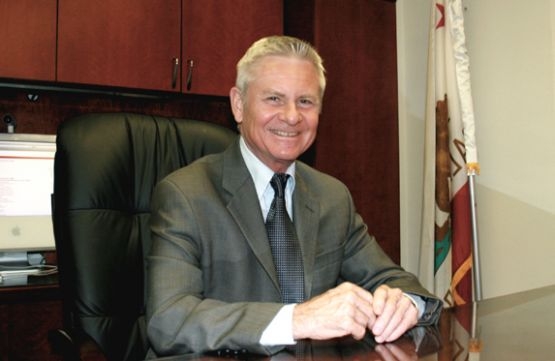
My Language Creates Me

My Language Creates Me

By David Nunan

I’VE never met Costica Bradatan, but I would like to. I recently came across a newspaper article he wrote in the International Herald Tribune. I like the International Herald Tribune even though I usually only get to read it when I come across a copy left in a coffee shop or when it is distributed for free on an international flight.

On this occasion, I was flying from Los Angeles to Hong Kong. The flight attendant handed me a copy of the International Herald Tribune and I began leafing through it while waiting for the in-flight movie to begin. But then I came across an article by this man I’d never met or heard of and I immediately forgot about the movie. The article was called “Born Again in a Second Language.” In it, Bradatan talks about what it is like to write in a second language. He begins his article by quoting a French philosopher, activist and writer who wrote: “For any man [or woman] a change of religion is as dangerous a thing as a change of language is for a writer. It may turn out to be a success, but it can also have disastrous consequences.” He goes on to argue that a language is a way of experiencing the world. “The world reveals itself in a certain manner to the Japanese writer, and in quite another to the one who writes in Finnish.” A writer’s language is more than just a tool. It’s a part of who they are. The implication here is that in order to write in another language you have to become a different person.
(more…)

Doing Business in the U.S. and Japan

CEO in Focus

Clarion Corporation of America

Paul Lachner, President

TJ: Have you noticed any difference in the corporate cultures or management styles between Japanese- and American-owned companies?
LACHNER: Definitely. But I think it’s dangerous to classify all Japanese companies as the same. I think they are as diverse as American companies are. I spent five years at Sony before coming to Clarion. Of course, working for Sony I thought I was working for a Japanese company. Then I came to Clarion and I realized that Sony was a very different experience than it is at Clarion. Sony is a very Western Japanese company in their management, thinking and strategic planning, whereas Clarion is a more traditional Japanese company. Having only worked at two, I can’t generalize. But I can say that Clarion, as big as it is with 10,000 employees and $2 billion in sales, has a real family feel. It helps that almost all of the senior management in Japan have come through Clarion Corporation of America at some point in their career, so a lot of the folks in Clarion are well-known and liked here and do understand the American model.

(more…)

Building the World’s Best Smart City for the Tokyo Olympics

Building the World’s Best Smart City for the Tokyo Olympics

TOKYO will host the 2020 Olympic Games. Since the 1964 Tokyo Olympics, Japan has achieved miraculous advancements in economic growth and infra- structure through the development and application of cutting-edge science and engineering technologies. During the 1970’s and 80’s, air pollution in Tokyo was a major problem, and I often returned disappointed from the blue skies of California. Since then Tokyo has become one of the largest and the most advanced cities in the world in areas such as: cleanliness, safety, dining, accommodation and transportation.
Japan is the world leader in utilizing energy efficiency for the purpose of developing GDP. The use of energy per GDP is less than half of the USA and 4.5 times less than China. Japan has advanced technologies for building a cleaner city.

(more…)

Standing Up To Culture

Standing Up To Culture

By Daniel Yankelovich

IN a changing world, Japan and the United States face similar challenges even though our histories and cultures are very different. In both nations, the influence of tradition and culture is wearing thin while individual choice grows stronger. This places a heavy burden of responsibility on the individual, more than most people are comfortable with.

In late September, Prime Minister Shinzō Abe wrote an editorial in The Wall Street Journal 1, titled “Unleashing the Power of Womenomics.” He out- lined a series of policies for which the dual purpose is to boost women in the workforce significantly and thereby also raise fertility rates.

Prime Minister Abe is well aware that combining these two goals runs counter to the long-held belief that female participation in the labor force lowers fertility rates. He cites a number of government policies that would make his twin goals compatible. These include: expanded day-care and nursing-care services, flexible work arrangements and better pay for women.

文化への抵抗
ダニエル・ヤンケロビッチ

この変化の時代にあって、日本と米国は、歴史的文 化的背景が大いに異なるとはいえ、似たような問

題 に直面している。日米のいずれでも、伝統と文 化がすたれつつある一方で、個人の選択が優先されるよ うになっている。この流れにより、多くの人が望む以上 に個人に重い責任がのしかかっている。 この秋、ウォール・ストリート・ジャーナル紙に安部 晋三首相の寄稿があった。タイトルは「安部総理、ウィ メノミクスのパワーを解き放つ」。女性の雇用を大幅に増 やし出生率上昇を促す一連の政策をまとめたものだ。

この2つの目標を掲 げることが、女性の雇用増は出生率 を下げるという長く正しいとされてきた論理に反するこ とを、安部首相は十分承知している。そのうえで彼は、 この2つの目標を両立させるための多くの政策に言及し ている。デイケアや介護サービスの拡大、柔軟な就労形態、 女性の賃金増などである。

(more…)

Moments in Construction

Moments in Construction

by H. Suzuki

TJ: Can you describe the process of taking photographs at a construction site?
SUZUKI: Shooting in monochrome is an expression by a single color consisting of light and shadow or white and black. The subject is achromatized and the composition of the picture is decided based on white (light) and black (shadow). The light and angle of the Sun, which is the origin of light, is one of the most important elements. Therefore, the time of the shoot and the weather are critical.

TJ: What are the biggest lessons you have learned about photography since you started?
SUZUKI: I try to find the perfect date and time for ideal light. However, sometimes I can achieve more in unexpected circumstances. Therefore, I have learned that I should be proud of myself for behaving casually.

TJ: 建設現場での写真撮影について説明してい ただけますか?
ス ズキ : モノクロームの撮影は光と影、白から 黒への一色表現です。撮影する被写体の色を消 すことは白い色は光、黒い色は影から一枚の絵 の構図を決めるということ。光の発信源である 太陽の光と角度は最重要項目ですね。だから撮 影の時間の決定と天候がポイント。

TJ: 写真撮影で学んだ一番大きな教訓は?
スズキ : 自分の決めた日程と時間に思いどおり の光が指すかどうか? しかし、想定してない 状況から想定以上の収穫があるので思いついた 自分に正直に行動をとる自分に自信をというこ とが学びです。

(more…)