Asakusa Souvenir Shops

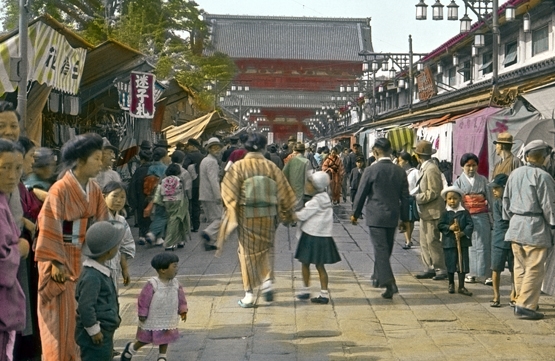
THE large photo of a crowd walking past shops along the approach to the Buddhist temple Sensoji was taken some time in 1934. Notice that while most men and even the children wear Western clothing, the women still wear kimono.

The shops, known as Asakusa Nakamise, were great crowd pleasers. Their origins are rooted in a harvest festival called Tori no Ichi. Held in November, long lines of people would wind their way along the rice pad- dies to pray and enjoy themselves at Sensoji. Naturally, this attracted a large number of merchants and entertainers, who were mostly located in the entertainment district behind the temple. Eventually, neighborhood merchants were allowed to open their shops in the approach to the temple as well.

Many of the shops developed “Asakusa Meibutsu,” or Asakusa specialties. These included Asakusa Nori (sheets of edible seaweed), Asakusa-gami (a kind of paper), Tondari Hanetari (small toys that jumped) and Fusayoji, or fairly large tufted tooth- picks made from willow trees or shrubs and used to clean the teeth as an early version of the toothbrush.
(more…)

Harajuku’s Link to the Olympics

Harajuku’s Forgotten Link with the Olympic Games

The 2020 Olympics will envelop Tokyo’s youth district of Harajuku, world famous as Japan’s center of street fashion. Every day tens of thousands of people come here to shop, hang out and see the latest trends. This square mile area is jam-packed with boutiques, fashion malls and chain stores – and it is located right at the center of the planned Olympic district.

Hopefully, the huge crowds and security presence that the Olympics would bring to Harajuku won’t smother the irreverent energy of this incubation center of Japanese pop culture. That would be painfully ironic because Harajuku partly came into being because of the Olympics.

The area was originally a small village inhabited by low-level samurai. Harajuku’s start as a center of fashion and youth culture came after WWII. U.S. Army barracks, called Washington Heights, were built in the nearby Yoyogi neighborhood, a former military drill area of the Japanese Imperial Army. Shops catering to American military families followed, and this attracted young people curious about Western culture.

When the 1964 Summer Olympics were held in Tokyo, Washington Heights became the Olympic Village for housing the athletes. People from all over Japan came to Harajuku for a chance to meet the athletes. The influx of young people persuaded young creators to set up shop in Harajuku. World famous Japanese fashion designers like Yohji Yamamoto and Rei Kawakubo of Comme des Garçons got their starts in small apartments in the area.

The complete article is available in Issue #272. Click here to order from Amazon

(more…)

Sassy and Savvy Stay in U.S. Capital

Sassy and Savvy Stay in U.S. Capital

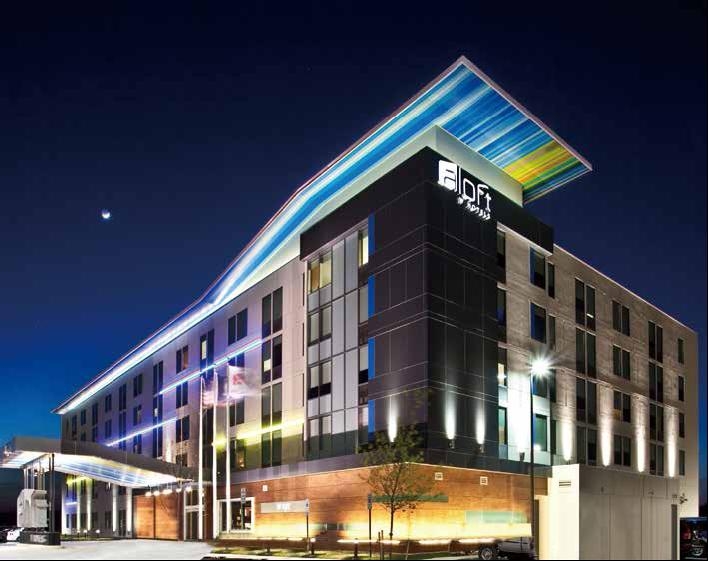
Aloft National Harbor & Aloft Dulles North

FOR a trendy stay while visiting the historic U.S. capital, consider the Aloft National Harbor or Aloft Dulles North hotels. The hotel chain’s core values are sassy, savvy and space. Sassy stands as a contrast to stuffy hotels. Savvy is because all the hotel staff (not just the bell captain or concierge) are knowledgeable of the hotel and city. Space? Well, the hotel’s public areas are just that: extremely spacious and not cramped. The hotel chain provides incentives to join in its sustainability practices. Guests who skip everyday room cleaning receive $5 towards the Re-Fuel station (food) or Starwood points. If you need a little extra motivation while on the go, stop by the Re:charge 24/7 fitness center and download easy-to-execute a-workouts onto your laptop, iPod, iPhone, Blackberry, Treo or other handheld device.

(more…)

Toyo Ito

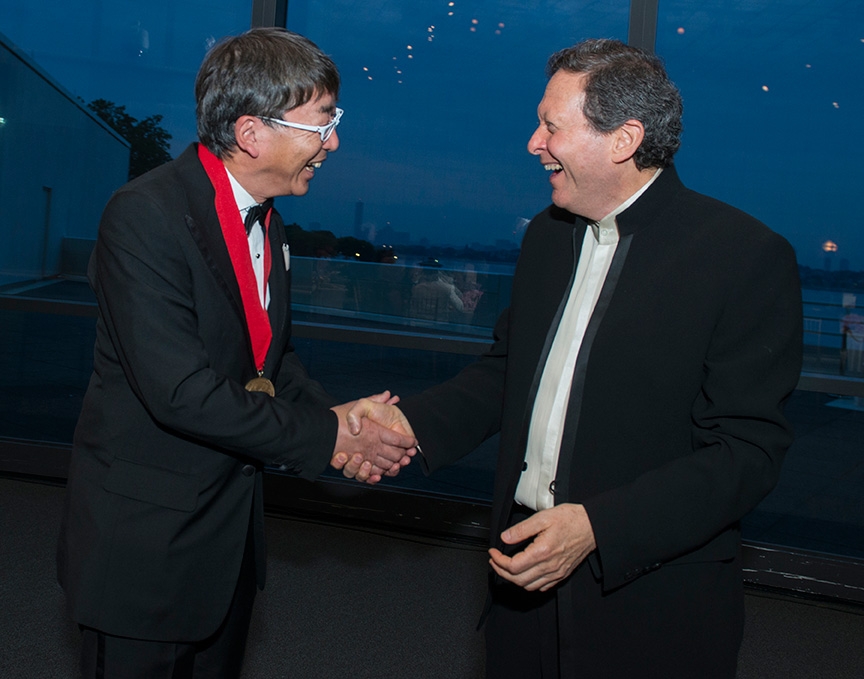
Architect Toyo Ito Presented with the 2013 Pritzker

Architecture Prize

ON May 29, 2013, Tom Pritzker, chairman of The Hyatt Foundation, presented Toyo Ito with the Pritzker Architecture Prize medallion for 2013 and a $100,000 grant. In his acceptance speech, Architect Toyo Ito said, “This is the best day of my architectural life so far!” Mr. Ito was the 38th recipient of the Pritzker Architecture Prize, which has been sponsored by The Hyatt Foundation since its founding in 1979. A black-tie audience of more than 300 guests, including previous prize laureates, witnessed the ceremony in the John F. Kennedy Presidential Library and Museum in Boston, Massachusetts. tj

The complete article is available in Issue #272. click here. to order from Amazon

(more…)

Garrity’s Japan

The Open Road Part II

The following is a continuation of Robert Garrity’s story describing his walk across Japan replicating Haiku Poet Matsuo Basho’s 2,500 kilometer journey from Fukugawa, Tokyo to Japan’s northern wilderness, as detailed in Basho’s world-famous “Oku no Hosomichi”. Robert Garrity began this journey in Summer of 1994, and broke it down into segments, walking the different segments each time he returned to Japan.

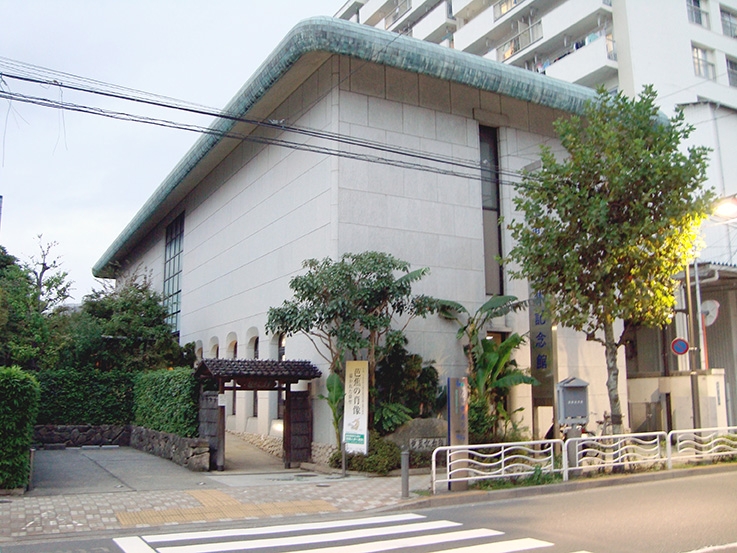
Basho Memorial Hall:
On the other side of the Sumidagawa bridge and down the street several blocks on the river- side is the Basho Memorial Hall, on the site of Basho’s original home. There is a banana tree in front that marks the hall.

(more…)