Dancing on Air

Dancer Adam Young Defies the Odds Battling Cystic Fibrosis

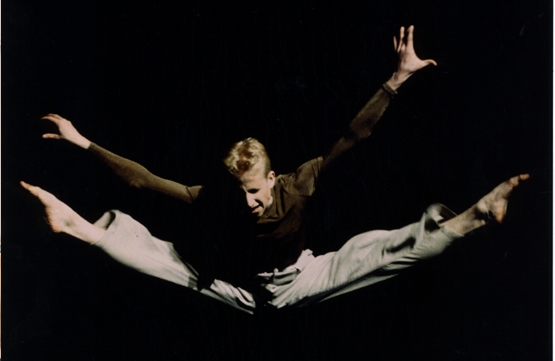
Adam Young is a 32-year old ballet, tap, jazz and contemporary dancer from California with cystic fibrosis (CF) who received a double lung transplant at UCLA in May 2013. He began dancing at the age of six in Riverside, California and won national competitions in the U.S. and Australia at the age of 17, as well as the Kennedy Center Emerging Young Artist Award Scholarship at age 18. He was offered a full scholarship to the renowned Julliard School and the Ailey School in New York but was unable to relocate due to CF complications. Graduating from the University of California, Irvine with honors on full scholarship as a dance major in 2003, he went on to dance with the Nashville Ballet for two seasons. He trained at the National Conservatoire de Paris and has danced, judged and taught throughout the United States and performed internationally in France, Germany, Australia, Canada and Mexico. His professional career was put on hold in 2006 when cystic fibrosis caused his lung capacity to fall below 40%. Adam’s determination to overcome an addiction to pharmaceutical drugs through a 12-step program in 2010 allowed him to receive his 2013 lung transplant, which has given Adam a chance to return to the stage and continue pursuing his passion for dance. TJ talked to Adam about his inspirational story.


(more…)

Yoshiki

Japan’s Rock Legend Yoshiki Rocks Classical Charts Worldwide

Visual Kei Pioneer Rock Legend and Classical Genius Gets Intimate with TJ

Interview by Anthony Al-Jamie

阅读文章请点击链接

30 million records sold, a 15-country world tour, 18 sold out Tokyo Dome concerts for 1,000,000 screaming fans, and Yoshiki and his band X Japan, are gearing up for another world tour. In his spare time, Yoshiki composed and recorded Eternal Melody, which remains one of Japan’s top-selling classical albums, and his most recent release “Yoshiki Classical” debuted at the top of the iTunes classical charts worldwide. He has collaborated with some of the world’s leading artists and producers including Queen’s Roger Taylor and legendary Beatles Producer Sir George Martin, performed for the Emperor of Japan, and he has created the theme songs for the World Expo and the last two Golden Globes. This classical genius is a hard rocking innovator and creator of the genre “Visual kei” – combining the styles of punk, rock, heavy metal, glam rock and classical music. In 2008, four years before Tupac’s hologram wowed Coachella, Yoshiki and X Japan brought back their deceased guitarist HIDE by hologram to perform in concert. Some may think it requires a super hero to accomplish all of this. Stan Lee, Marvel Comics founder and creator of Spiderman and the Hulk, agreed and created a superhero based on Yoshiki called “Blood Red Dragon.” What can’t Yoshiki do? Let’s find out.

(more…)

Tokyo Wins 2020 Olympic Bid

Tokyo Wins 2020 Summer Olympic Bid

THE International Olympic Committee (IOC) elected Tokyo as the 2020 host city at the 125th IOC Session in Buenos Aires, Argentina on September 7, 2013. The IOC was deciding between Madrid, Istanbul and Tokyo. The Tokyo 2020 Bid Committee promoted its delivery (by demonstrating that Tokyo will provide guaranteed quality and maximum benefits), celebration (by advocating that Tokyo will be a great host of a wonderful party) and innovation (by showing that Tokyo will use all the creativity of the world’s most forward-thinking city to benefit sport and the Games.) If you think numbers speak louder than words, than here are statistics that the Tokyo 2020 Bid Committee have compiled to support their bid to host the world’s leading international sporting event.

(more…)

Michael Graves

Good Design for the Quality of Everyday Life

Interview by Dr. Anthony Al-Jamie

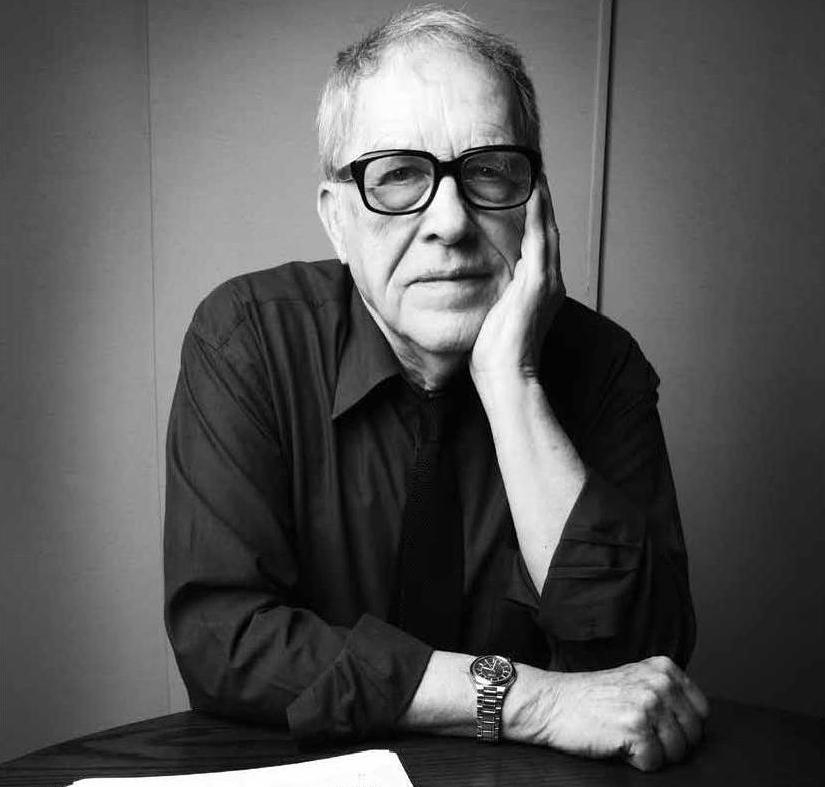
Identified as one of the New York Five, Michael Graves is an American architect known for his contemporary building designs as well as his domestic products for such companies as Target, J.C. Penney, Disney, Philips and Black & Decker. Born in Indianapolis, he earned a master’s degree in architecture from Harvard University and is the Robert Schirmer Professor of Architecture, Emeritus at Princeton University. His firm, Michael Graves & Associates, has offices in Princeton, New Jersey and New York City. Graves was elected a fellow of the American Institute of Architects (AIA) and a senior fellow of the Design Futures Council. He has received numerous awards including the National Medal of Arts, the AIA Gold Medal, the AIA Topaz Medal and the Driehaus Prize for Classical Architecture. He is credited with broadening the role of the architect in society and raising public interest in good design as essential to the quality of everyday life.

(more…)

Food Allergy

Educating the World about the Deadly Danger of Food Allergies

Interview with Food Allergy Research & Education CEO John Lehr

Potentially deadly food allergies affect one in 13 children in the United States, or roughly two in every classroom. Food Allergy Research & Education (FARE) is a nonprofit organization that works on behalf of the 15 million Americans with food allergies, including those at the risk of life-threatening anaphylaxis (an extreme and often life-threatening allergic reaction to an antigen). Tokyo Journal International Editor Anthony Al-Jamie met with FARE CEO John Lehr.

(more…)

Remembering Donald Richie: A Living Tribute

Donald Richie, a world authority on Japanese film, culture and the post-World War II lives of the Japanese, passed away in Tokyo on February 19, 2013. He was 88. Born in Lima, Ohio on April 17, 1924, Donald grew up with a love for cinema. He moved to Japan on December 31, 1946 as part of the U.S. Occupation. During the early part of his stay in Japan, he worked as a typist and civilian staff writer for the U.S. Military newspaper, the Pacific Stars and Stripes. He returned to the U.S. and received a B.S. in English from Columbia University before going back to Japan. He went on to write several books on Japan and its cinema and filmmakers as well as other topics. He wrote for English-language publications in Japan including The Japan Times, in which he had a regular column as a film critic, and the Tokyo Journal, for which he interviewed and contributed several pieces over the years.

(more…)

Donald Richie Interview by Pat Carome

The following interview with Donald Richie first appeared in the April 1992 edition of the Tokyo Journal

DONALD Richie seems at home in the quiet confines of Roppongi’s International House, a scholarly association where he recently accompanied a silent film showing on the piano.

Our small table in the coffee shop straddles two dimensions: the din and clatter of the lunchtime crowd on one side, the carefully pruned garden outside the window on the other.

Richie is credited with bringing Japanese film to the eyes and ears of the outside world. Hanging on the walls of his home next to his shelves of books are among other honors, the U.S. Citation of the National Film Critic’s Society and the San Francisco Film Society Award.

Of his 3o books, 11 are about film. Four are novels and one is a collection of profiles of Japanese. “I don’t know exactly what to call it.” He says. “I find it in the strangest places in bookstores.” He’s also presented career retrospectives of Kurosawa, Mizoguchi, and Ozu at the Cannes and Berlin film festivals.

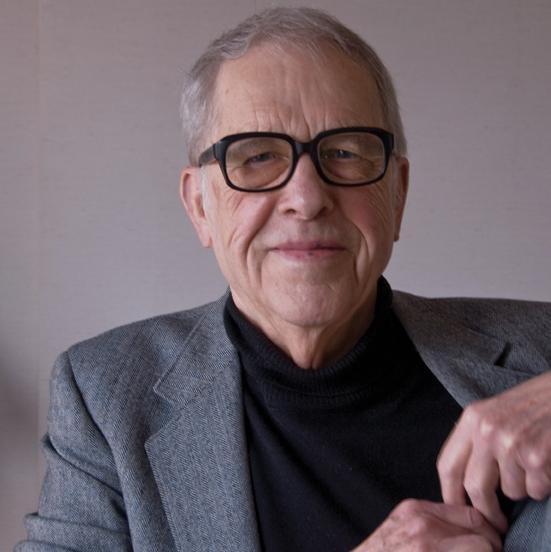
In his beige tweed jacked worn over a navy blue shirt and a narrow brown tie, he looks every bit the part of someone’s kind uncle. But he has definite concerns about the accuracy of how he’s presented. “Make sure you get the chronology straight,” he insists.

(more…)

Winter Solstice:1947

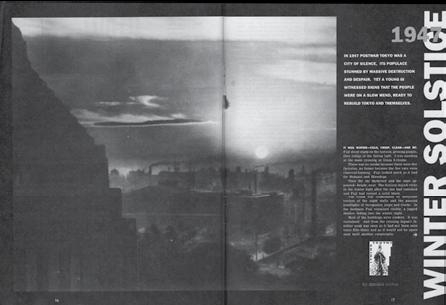
The following article by Donald Richie is a reprint of his article that first appeared in the Tokyo Journal in April 1991.

IN 1947 Postwar Tokyo was a city of silence, its populace stunned by massive destruction and despair. Yet a young GI witnessed signs that the people were on a slow mend, ready to rebuild Tokyo and themselves. It was winter – cold, crisp, clear – and Mt. Fuji stood sharp on the horizon, growing purple, then indigo in the fading light. I was standing at the main crossing at Ginza 4-chome.

There was no smoke because there were few factories, no fumes because the few cars were charcoal-burning. Fuji looked much as it had for Hokusai and Hiroshige.

Then the sky darkened and the stars appeared – bright, near. The horizon stayed white in the winter light after the sun had vanished and Fuji had turned a solid black.

The Ginza was illuminated by acetylene torches of the night stalls and the passing headlights of Occupation jeeps and trucks. In the darkness Fuji remained visible, a jagged shadow fading into the winter night.

Most of the buildings were cinders. It was wasteland. And from the crossing Japan’s familiar peak was seen as it had not been seen since Edo times and as it would not be again seen until another catastrophe.
At the crossing there were only two large buildings still standing. One was the Ginza branch of the Mitsukoshi Department Store. But it was gutted, hit by a fire bomb, and even the window frames had been twisted by the heat. Across the street was the white stone Hattori Building with its clock tower. It was much as it had always been, once the clock itself was repaired. With its curved front window, cornices, and pediments, it remained from the pre-war Ginza.

The complete article is available in Issue #271. Click here to order from Amazon

(more…)

The Legacy of Donald Richie

DONALD RICHIE An Appreciation

by Peter Grilli

Written for the Memorial Gathering at International House of Japan, Tokyo (April 15, 2013)

As the world mourns “Donald Richie, the writer,” “Donald Richie, the renowned expert on Japanese cinema” and “Donald Richie, the insightful commentator on Japan,” I stand in awe of the deluge of affection and gratitude that has greeted the news of his death. One might well expect such a response from the community of specialists on film history or on Japan, the critics, historians and academic experts who had benefited for decades from his work. It could be no less, after all, since Richie had written so extensively on those subjects and is counted among the iconic giants of these fields of study. But the tributes, letters, essays, e-mails, blogs and tweets flowing from countless admirers who had never met him or heard him speak – people who knew him only from his writings – is nothing less than astonishing. “He changed my life” or “he opened my eyes to new worlds” are common themes. Or “he showed me how to see.”
Donald changed my own life in many ways… and, indeed, he showed me how to see. He has been a direct and continual influence on me since childhood, and I know he will remain so for the rest of my life. In every person’s life there are certain individuals – apart from the parents responsible for one’s very existence – who teach or shape or inspire, who mold or influence one’s consciousness in fundamental ways. Donald Richie was such a one for me: a mentor, a teacher, a role model, a friend, a beloved “uncle” unrelated by blood. I will always be in his debt.

(more…)

Tokyo Anti-Nuclear Demonstrations

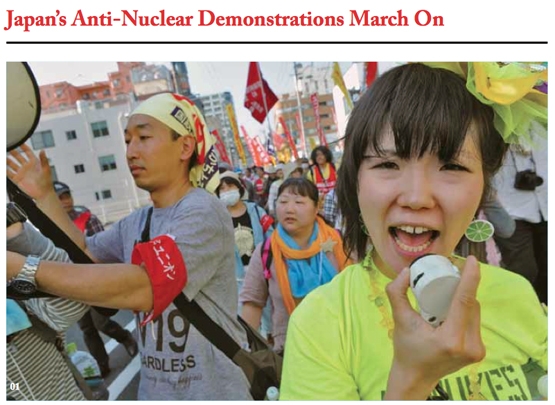
Japan’s anti-nuclear demonstrations march on. Japan’s residents take to the streets. Friday protests in front of the Prime Minister’s residence have become the norm.

(more…)