

Fashion Design by Junko Koshino

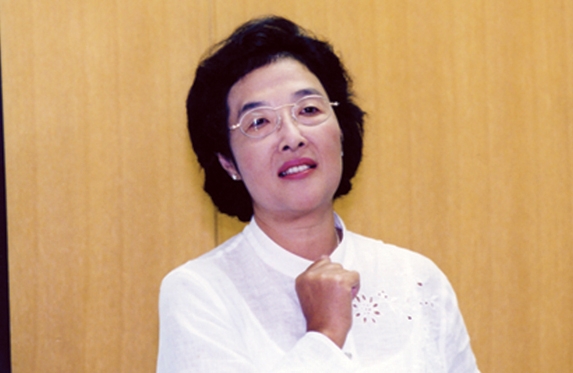
Tokyo’s Fashion Queen and Tony Award Nominee Junko Koshino, renowned for her fashion, costume and uniform design, shares the latest in Tokyo’s fashion scene.

Junko Koshino

TJ: How did you first get started in fashion design?
Koshino: My mother owned her own clothing boutique in Osaka. Therefore, from early childhood, I was surrounded by design. My older sister, Hiroko, was supposed to take over my mother’s business so I didn’t have to enter the fashion world, and I tried to become interested in other subjects. Before I entered Art College, Hiroko and I went to the same high school. It was a very prestigious one, and we both chose the same art club. I did oil paintings and my sister did water colors. I then went to Art College, but it turned out that the fashion world was my destiny after all. I liked to paint from early childhood, so for me it is very easy to create pictures of design styles. At one point, after I entered Art College, I decided I actually wanted to be a designer instead of a painter. So, I switched my major and I focused on design. This story of my mother and my sisters (who are all fashion designers) was featured on the NHK (Japanese national broadcasting station) Drama “Carnation” in 2011 and 2012.

TJ: Your sisters Hiroko and Michiko are also renowned fashion designers. How often do you keep in touch and do you ever collaborate?
Koshino: We don’t meet very often, about four times a year. Each year, we meet at a very famous festival in our hometown, which is the Kishiwada area of Osaka and also at the Lumiere Vision Exposition in Paris. We sometimes meet for a ceremony in memory of our mother as well. We collaborated for a show for our mother two times a few years ago, but we haven’t collaborated since she passed away.
(more…)

Movie Subtitling: Natsuko Toda

Interview series with Japan’s most renowned translator of foreign films and interpreter for Hollywood stars, Natsuko Toda.

TJ: Can you tell us about how you got started in your career?
Toda: I saw a lot of movies in my school days, and I absolutely loved them. After graduating from Tsuda College, I visited Japanese subtitling pioneer Shunji Shimizu to ask about working in the field of movie subtitling. He said mastering the skill was difficult and there weren’t many opportunities for work in the field. But, I was not discouraged. I chose a non-film industry related job and began working at Dai-Ichi Life Insurance Company in the Hibiya area of Tokyo. However, I didn’t abandon my passion for movies. Pretty soon I quit Dai-Ichi Life and began working part-time jobs as a translator. I did all kinds of translations including industrial manuals, magazine articles and books. Eventually, I began doing movie-related translations and dictation for Shimizu sensei, and through this relationship, I was offered the opportunity to interpret at a press conference. It was almost 10 years after I graduated from college before I had the opportunity to be offered the job of subtitling for a Francois Truffaut movie and I was fortunate to have Shimizu Sensei provide advice during that time in my career.

(more…)

On Tour with Bob Gruen

Go on tour with legendary rock photographer Bob Gruen, who is one of the most well known and respected photographers in Rock and Roll.

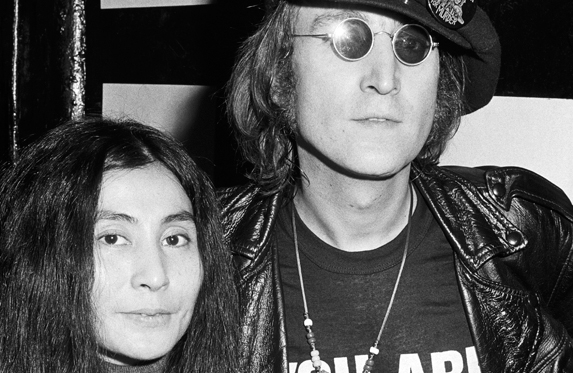
HELLO Japan! I am very happy to have been asked to make a regular feature column for the Tokyo Journal! I thought I would start with a few pictures that show where my career began.

Growing up in the 1950s, I heard rock and roll when it was first played on the radio and I was an immediate fan. After High School in the late sixties, I was living with a rock band and started my career by taking pictures of them. When they were discovered, their record company used my photos and hired me to photograph more groups.

Soon I was working for many record companies and in 1972 I was included in ‘The Photography of Rock’, the first book of rock music photos. The writer, who interviewed me for the book, liked my photos and the following week brought me to his magazine interview with John Lennon and Yoko Ono. John & Yoko liked the photos I took and used one in the package for their next record album. And I’ve been very busy ever since.

(more…)

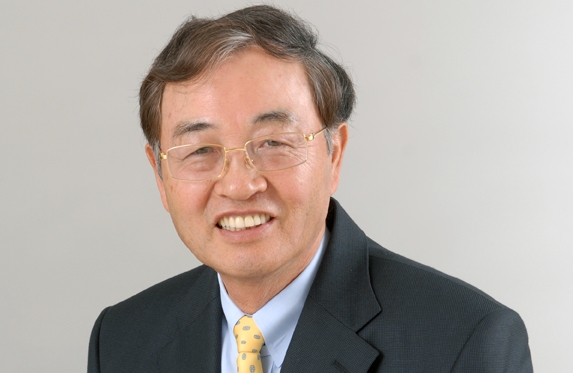
NUCLEAR CRISIS: HIROSHI TASAKA

INTERVIEW SERIES WITH PRIME MINISTER KAN’S SPECIAL ADVISOR & NUCLEAR EXPERT DR. HIROSHI TASAKA

Nuclear expert, philosopher, strategist, social entrepreneur and former advisor to Prime Minister Kan, Dr Hiroshi Tasaka shares his views on Japan.

TJ: What role have you played in serving as an Advisor to Prime Ministers?
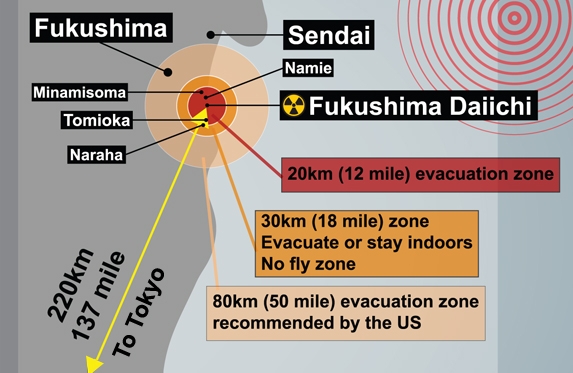
Tasaka: On March 29, 2011, shortly after the March 11 Fukushima Nuclear Power Plant accident, I was appointed by the Prime Minister of Japan Naoto Kan as his Special Advisor to serve him as an expert of nuclear engineering in an effort to cope with the accident. My role as a Special Advisor to the Prime Minister shifted from devising a way to stop the accident to proposing ways to reform nuclear regulations and nuclear industries, as well as investigating ways to change national energy policy.
I resigned from the position on September 2, 2011, when the cabinet changed. I had served as an advisor for five months and five days during the most critical period after the accident.

(more…)

Hiroyuki Suzuki Photo Exhibit Interview #1

Hiroyuki Suzuki’s camera lens has taken him to construction sites around the world in an ambition to capture the instability, energy, beauty and hope – he sees as intrinsic within these sites.

Hiroyuki Suzuki

TJ: How did you first get interested in photography?
Suzuki: I first became interested in photography 50 years ago when I was in the 5th grade of elementary school and was given a Konica Camera as a present. At the time I was also interested in painting. I was in Yaizu in Shizuoka Prefecture, which is a port city, so I often painted boats. Normally, people paint a boat in the center of a picture, but from the beginning I would use a non-standard composition. I might paint 2 boats in the painting, but for example, only part of one boat would be on left side of the painting and part of the other boat would appear on the right side of the painting, with a gap between the boats. It was not the usual focal point for a picture. I often use this same approach in my photos.

TJ: How would you describe your style of photography?
Suzuki: I wouldn’t say I have a specific style. I like to capture the moment. I play soccer, and I learned that if you want to score, you need to seize opportunities, and that’s what I do in my photography. In black and white photos, composition and light are important. I don’t need any colors. In my photos, the composition of my pictures is like my original style of paintings, and is not like that of other photographers.

(more…)

YOGA ADVOCATE JUDIT TOROK

A regular visitor to Tokyo, New York City-based Yoga Instructor and Interculturalist Judit Torok shares her techniques for alleviating big city stress.

Yoga for Everyone

I recently read an article about parents of elementary school children in California who were outraged about their children practicing Ashtangastyle yoga at school as part of their physical education program. They claimed that yoga is inappropriate and dangerous for kids because they believe their children are being indoctrinated into the Hindu religion in a public school. I couldn’t disagree with them more. These parents, and unfortunately many other people, hold inaccurate notions of this ancient practice.

(more…)

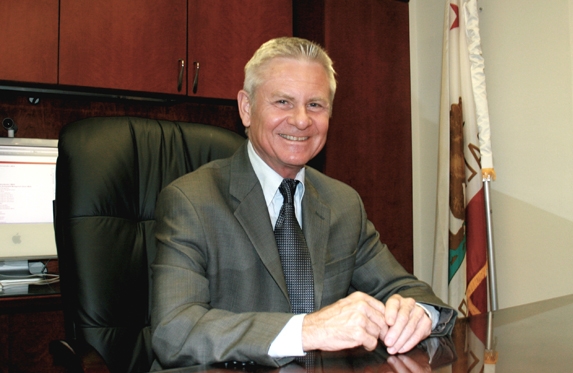
JAPANESE BUSINESS MASAKATSU MORI

Former Accenture Chairman Masakatsu Mori, shares his 30 years experience of advising many of Japan’s leading corporations as well as foreign corporations doing business in Japan and beyond.

TJ: Companies in Japan are revolutionizing the meaning of globalization by making English the official language of their headquarters, even while others are remaining domestic- minded by not promoting English in the workplace. What are your thoughts on these approaches, and which approach do you think is needed for Japan? On another note, why do you think Japan has been struggling with competition from companies in China and South Korea, and what can Japan do to remain competitive?

Mori: Japanese corporations have accumulated a wealth of capital and technology, with the total in accumulated cash at US$2.5 trillion. Japanese companies hold the top five spots for highest patent values in the world. Even so, the number of business leaders able to do business in the global market lags behind other major countries. The development of executives who can harness Japan’s huge capital and technological resources for doing business in the global market is a national priority. Two young companies are leading this charge: Fast Retailing and Rakuten. They are challenging Japanese corporations by aggressively transforming into global players with sustainable growth. This is leaving its mark on traditional companies, albeit gradually. More companies are starting to consider at least minimum TOIEC scores before hiring new employees and promoting others to management positions. Being able to speak English and understand different cultures and business habits are now seen as keys for success in the global marketplace.

(more…)

GLOBAL EDUCATOR DAVID NUNAN

World-acclaimed linguist and language educator Dr. David Nunan shares his own personal learning experiences from his 30 years in the classroom.

Only connect

ONE of the joys of being an English language teacher for non-native English speakers is the opportunity to meet a diversity of individuals from different cultures and walks of life. Over the years, I have taught (and learned from) thousands of students of all ages and backgrounds. Occasionally I bump into former students and listen eagerly to the stories they tell me about their lives, from their successes and failures to their triumphs and tragedies. Once or twice at the end of a conversation, a former student has said, “Thank you for teaching me. You changed my life.” Hyperbole, perhaps, but for a teacher nothing is more rewarding than that from a former student.

(more…)

Parenting with Lorraine

30-year veteran Marriage Family and Child Therapist and mother of 5 assists parents in acquiring skills that enhance their ability to raise high-functioning and happy children.

Respect

What outcome are we aiming for?

It is almost universally agreed that the most important job in the world is raising a child, and yet, it is often something we undertake without any preparation. Generally, we parent as we were parented and sometimes this leads to a positive outcome. However, we are not always clear about what outcome we are aiming for.

Blind obedience?

Do we want our children to be blindly obedient? In some cases, “yes.” For example when we shout “STOP” when our child is about to step into oncoming traffic without looking. But how about when we call them to come to us when they are in the middle of some task that is important to them? Are we willing to hear “just a minute, I’m playing a video game.” For some, that is a natural and acceptable response. For others it may feel like defiance. What makes for that difference in our reaction? Generally, it is in the tone of the relationship we have developed with that child.

(more…)

A PROBLEM NOT CONFINED TO THE UNITED STATES

See how one of the world’s most influential people in public affairs, communications and public relations, Daniel Yankelovich, views the world.

A PROBLEM NOT CONFINED TO THE UNITED STATES

DEMOCRACIES with capitalist economic systems like those in Japan, the United States and Europe have many features in common. One is to compartmentalize thinking about the economy as if it were an autonomous system that operated in isolation of the larger society to which it belongs. Such thinking can lead to serious miscalculations of the sort that currently threaten the social contract that now prevails in the United States.

Most economic theorists acknowledge that capitalism creates inequalities. This is a tradeoff that most Americans up to now have willingly accepted, despite the high value we place on equality. To reconcile the conflicting pulls of freedom and equality, Americans have settled on the principle of equality of opportunity as the underlying core value of democratic capitalism. Unfortunately, however, the traditional American value of seeking to “better oneself ” is beginning to show signs of erosion. This is because it is becoming increasingly difficult to realize.

(more…)